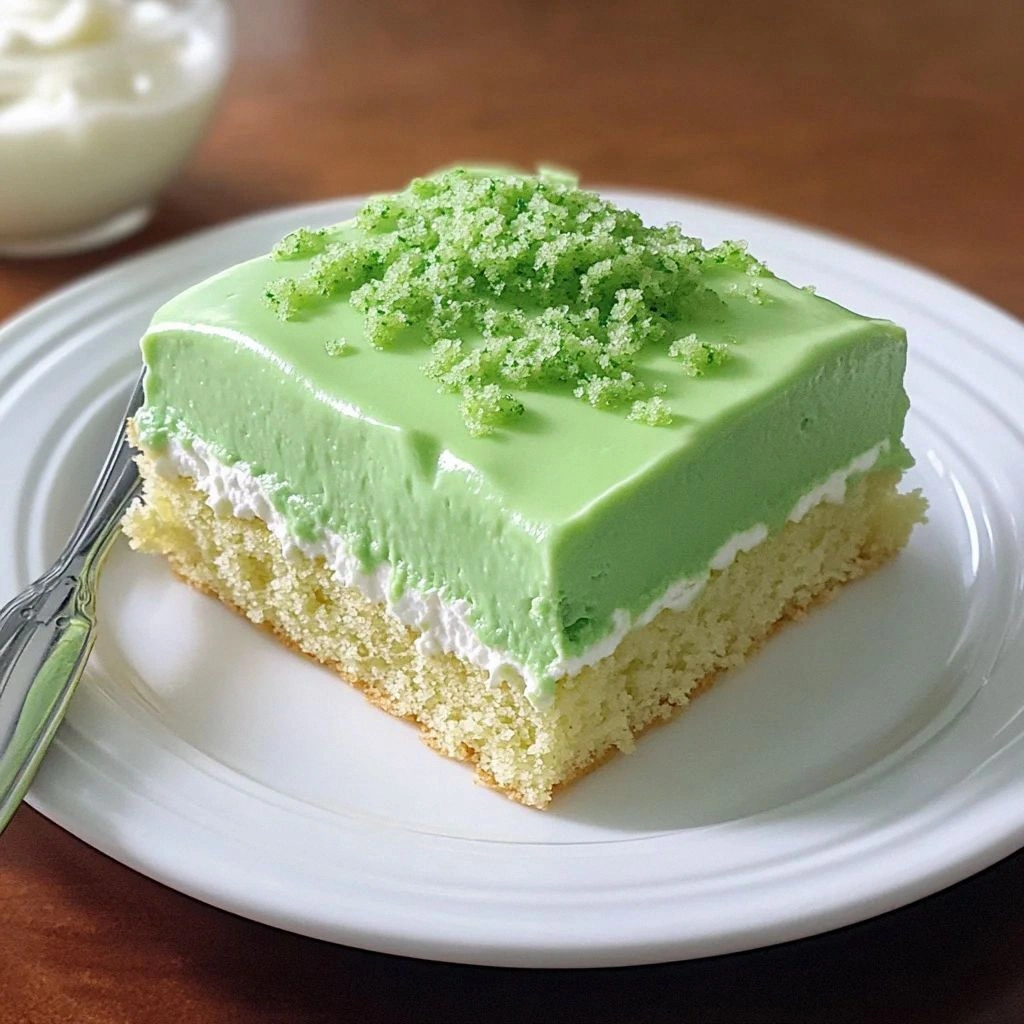
I still remember the first time I tasted a cake that was so vividly green it looked like it had been plucked straight from a fairy tale. My friend's birthday party, backyard strung with lights, and someone unveiled this emerald beauty that tasted like sunshine bottled into citrus form. One bite and I was obsessed. Not just with the color, but with the way the lime sang through each forkful, bright and clean, like someone had folded a summer afternoon into dessert form. I begged for the recipe, but the baker just winked and said, “Family secret.” Challenge accepted. I went home, tied my apron tighter, and launched into what would become a month-long obsession—testing, tweaking, tasting, failing, triumphing—until this very version emerged from my oven and promptly disappeared within 24 hours. I dare you to taste this and not go back for seconds. Actually, I dare you to possess the willpower to let it sit longer than a day. Spoiler: you won’t.
Picture yourself pulling this out of the oven, the whole kitchen smelling like a Key-West sunset: buttery cake mingling with zesty lime oils that practically dance through the air. The surface will have the faintest sugary crackle, like the top of a crème brûlée in disguise, while the interior stays plush and tender, tinted the most outrageous shade of green. Not the muted, apologetic green of health-food muffins—no, this is Technicolor, emerald-city, Instagram-blow-up green. And before you panic about food coloring, relax. The color comes from a secret weapon ingredient you probably already have in your pantry, but nobody expects in dessert. Stay with me here—this is worth it.
Most recipes get this completely wrong. They dump in a bit of lime juice, maybe some zest if they’re feeling fancy, and call it a day. The result? A vaguely citrus-scented sponge that tastes like disappointment wearing perfume. The real magic happens when you treat lime like three separate ingredients in one: the bright acidity that tenderizes, the fragrant oils in the zest that perfume, and a concentrated syrup that glazes the warm cake so every bite shimmers with flavor. Okay, ready for the game-changer? We’re going to reduce fresh lime juice with a kiss of sugar until it turns into a sticky, puckery syrup, then brush it onto the cake while it’s still warm so it seeps down and creates a mirror-shine finish that locks in moisture for days.
I’ve baked this for potlucks, bridal showers, and that one dinner party where I accidentally ate half the loaf before anyone else arrived—confession time, I have zero regrets. Every single time someone takes a bite, their eyes go wide, they pause mid-chew, and then the inevitable question: “Why is it green?” followed immediately by “Can I have the recipe?” Consider this my official answer to both. Let me walk you through every single step—by the end, you’ll wonder how you ever made it any other way.
What Makes This Version Stand Out
Taste Explosion: We’re talking lime in triplicate—zest for perfume, juice for sparkle, and a glossy syrup that saturates every crumb so the citrus blooms from the inside out. Most cakes whisper lime; this one sings it from the rooftops.
Color Without the Bottle: The vibrant green comes from a pinch of matcha powder, which adds grassy depth and antioxidant bragging rights without tasting like a salad. It’s the culinary equivalent of a party dress that looks expensive but cost twenty bucks.
One-Bowl Wonder: Forget separating eggs or alternating dry and wet like a nervous chemistry student. Dump, whisk, bake—yet the crumb still rises lofty and fine, thanks to a clever ratio of baking powder to acidic lime.
Texture That Melts: Oil keeps things plush for days, while a modest hit of butter brings old-school flavor. The result? A cake that slices cleanly, yet dissolves on your tongue like cotton candy dipped in cream.
Crowd Gasps Guaranteed: Bring this to any gathering and watch people hover, phones out, before they’ve even tasted it. The color is a conversation starter; the flavor is a conversation finisher—because everyone’s too busy chewing to talk.
Make-Ahead Hero: Flavors deepen overnight, so bake it Friday, glaze it Saturday, serve it Sunday brunch, and you’ll look like a planning genius even if you hit snooze three times that morning.
Alright, let’s break down exactly what goes into this masterpiece...
Inside the Ingredient List
The Flavor Base
All-purpose flour forms the scaffolding—too much and the cake turns brick-dense, too little and it collapses like a bad soufflé joke. I use 1½ cups spooned and leveled, plus a tablespoon reserved to toss with the lime zest so it disperses evenly instead of clumping into bitter green freckles. Sugar isn’t just sweetener here; it’s structural. We’re using ¾ cup granulated to cream with the butter, creating air pockets that expand in the oven for lift. Skip the sugar and sure, you’ll have a weirdly savory loaf, but you’ll also have the structural integrity of a wet napkin. Don’t do it.
The Texture Crew
Two fats are better than one. Four tablespoons of butter bring flavor nostalgia, while ¼ cup neutral oil keeps the crumb moist even after refrigeration. Eggs supply protein nets that trap steam, but we only need two because excess protein toughens cake—yes, there’s such a thing as too much strength. Whole milk adds tenderness; if you’re dairy-free, full-fat coconut milk subs beautifully and doubles down on tropical vibes. Finally, a teaspoon of vanilla anchors the lime so it tastes like dessert, not like someone spilled margarita mix in your batter.
The Unexpected Star
Here’s where eyebrows raise: a single teaspoon of culinary-grade matcha. Not enough to taste grassy, just enough to tint the batter that cinematic green. Matcha’s slight bitterness marries with lime’s tang, creating complexity that makes people say, “I can’t put my finger on why this is so addictive.” If you skip it, the cake still tastes great but loses the show-stopping color that makes kids point and adults reach for their cameras.
The Final Flourish
Three limes will cover the whole recipe: zest of two for the batter, juice of all three simmered into a syrup with two tablespoons of sugar. The glaze gets a pinch of salt—yes, salt—to sharpen the sweetness and make the lime pop like a firework. Once cooled, a quick dusting of powdered sugar on top mimics morning frost on grass, just pretty enough to photograph before you hack the first slice.
Everything’s prepped? Good. Let’s get into the real action...
The Method — Step by Step
- Preheat your oven to 350 °F (175 °C) and position a rack smack in the center. Grease a 9×5-inch loaf pan with butter, then line it with a parchment sling that overhangs the long sides like gift-wrap handles. This tiny extra step means you’ll lift the cooled cake out flawlessly instead of performing the dreaded upside-down shake-and-pray maneuver. If you’ve ever lost a cake to gravity, you know why this matters.
- In a small bowl, whisk lime zest with one tablespoon of the measured flour until every strand is dusty and separated. This prevents the zest from sinking like sad little anchors to the bottom of your loaf. Set it aside and notice how the oils already perfume the air—your kitchen is about to smell like a lime orchard exploded in the best possible way.
- Cream the butter and sugar for a full three minutes. I set a timer because I’m impatient and three minutes feels like waiting for water to boil on Mount Everest. You want the mixture to lighten from school-bus yellow to pale buttercup and double in volume; those air pockets are cheap insurance against a dense cake. Scrape the bowl once halfway so no sneaky butter pebbles escape the party.
- Beat in the eggs one at a time, letting each fully incorporate before adding the next. The batter will look curdled—relax, that’s just the butter throwing a tiny tantrum because the eggs are colder. Keep mixing and it’ll smooth out like a good apology. Stir in the vanilla and watch the batter turn silk-glossy, the kind of texture that makes you want to dab it behind your ears.
- Scatter the matcha across the batter and fold just until you see green ribbons swirling through like marble. Don’t overmix; gluten is lurking, waiting to toughen your cake into shoe-leather status. The color will look alarmingly neon—channel your inner Shrek and trust the process.
- In a measuring cup, whisk milk and oil together. Add half to the batter along with half the flour mixture. Fold with a spatula, scraping the bottom like you’re sweeping crumbs off a counter. Repeat with remaining liquids and flour, stopping as soon as the last dusty streak disappears. A few tiny lumps are okay—better under-mixed than over-worked.
- Gently fold in the lime-zest flour. The batter should feel light, almost mousse-like, and smell like a tropical cocktail. Pour it into your prepared pan and smooth the top with an offset spatula. Give the pan a confident tap on the counter to pop any large air bubbles—hear that thud? That’s the sound of impending deliciousness.
- Bake for 45 to 50 minutes, rotating the pan halfway for even color. The cake is done when it pulls slightly from the sides, a toothpick inserted at 45 degrees comes out with a few moist crumbs, and the surface springs back like a gentle trampoline. Cool in the pan on a rack for 10 minutes—no longer or condensation will sog the bottom.
- While it cools, simmer lime juice and sugar in a tiny saucepan over medium heat until reduced by half and syrupy enough to coat the back of a spoon. Your kitchen will smell like a Key West distillery; resist drinking it straight. Brush the warm syrup generously over the cake, letting each layer soak in before adding the next. The glaze will set into a mirror finish that cracks delightfully under your fork.
That’s it—you did it. But hold on, I’ve got a few more tricks that’ll take this to another level...
Insider Tricks for Flawless Results
The Temperature Rule Nobody Follows
Room-temperature eggs and milk aren’t foodie snobbery; they’re science. Cold eggs shock the butter back into stiff little beads, while warm liquid helps the batter emulsify into a silky emulsion that traps air like microscopic balloons. Forgot to plan? Submerge eggs in warm tap water for five minutes and microwave milk for 10 seconds. Instant room temp, zero guilt.
Why Your Nose Knows Best
When the cake is nearly done, you’ll smell a toasty sweetness that suddenly shifts to fragrant lime. That aromatic cue means the sugars have caramelized and the essential oils are evaporating—pull it out within three minutes or risk drying the crumb. Trust your olfactory radar; it’s more reliable than any timer.
The 5-Minute Rest That Changes Everything
Once glazed, tent the cake loosely with foil and walk away for five minutes. The steam softens the outer crust just enough to create a thin, pudding-like layer under the glaze—essentially a self-saucing cake without the puddle. A friend tried skipping this step once; let’s just say it still tasted great but lacked the melt-in-mouth halo that keeps people guessing.
Creative Twists and Variations
This recipe is a playground. Here are some of my favorite ways to switch things up:
Coconut-Lime Staycation
Swap the neutral oil for melted coconut oil and replace milk with full-fat coconut milk. Sprinkle unsweetened toasted coconut on top of the glaze. Close your eyes and you’re on a beach in Phuket, minus the jet lag.
Mojito Birthday Bash
Add two tablespoons of white rum to the glaze and fold in a handful of finely chopped fresh mint with the zest. Bonus points if you serve it with a tiny rum-spiked lime wedge cocktail.
Spicy Margarita Edge
Whisk ¼ teaspoon cayenne into the dry ingredients and rim the cooled cake with a mix of sugar and flaky salt. The sweet-heat-salt trifecta mimics the cocktail without the hangover.
Berry-Green Marble
Pour two-thirds of the batter into the pan, swirl in ⅓ cup raspberry purée, then top with remaining batter. The magenta streaks look like abstract art and the tart berries play beautifully against lime.
Mini Loaf Army
Divide the batter among four mini loaf pans and bake for 25 minutes. Wrap in parchment and ribbon for edible gifts that disappear faster than office donuts on a Monday.
Zebra Cheesecake Swirl
Beat 4 oz cream cheese with 2 Tbsp sugar and dollop onto the batter; drag a toothpick through to create black-and-white stripes. The tangy pockets contrast the sweet citrus like a creamsicle gone gourmet.
Storing and Bringing It Back to Life
Fridge Storage
Once completely cool, wrap the loaf tightly in plastic wrap, then slip it into a zip-top bag. It keeps five days in the fridge, though I’ve never witnessed it survive past day three. The glaze may dull slightly, but a quick hair-dryer blast on low (yes, really) brings back the shine—just don’t melt the icing.
Freezer Friendly
Slice the cake, slip parchment between pieces, and freeze flat on a tray. Once solid, toss the slices into a bag. You can grab a single piece at 2 a.m. without thawing the whole loaf—midnight cravings, officially sanctioned. Thaw 30 minutes at room temp or 10 seconds in the microwave for that fresh-baked softness.
Best Reheating Method
Skip the microwave if you want crisp edges. Instead, warm a skillet over medium-low, add a pat of butter, and toast slices cut-side down for two minutes. The edges caramelize like pound-cake croissants, and the kitchen smells like you baked all over again.