Picture this: it’s a rainy Tuesday evening, the kind that makes you curl up on the couch and wish for something comforting that doesn’t require a culinary degree. I was staring at a half‑empty pantry, a lonely can of beef broth, and a stubborn craving for a dish that could hug my soul. I tried a quick skillet dinner, but the result was as flat as a pancake without syrup—no depth, no heart, just bland. That disappointment sparked a dare: “I’ll create the ultimate ground beef and dumplings that could convert even the most skeptical meat‑and‑potato fan,” and I’ve been on a flavor‑hunting mission ever since.
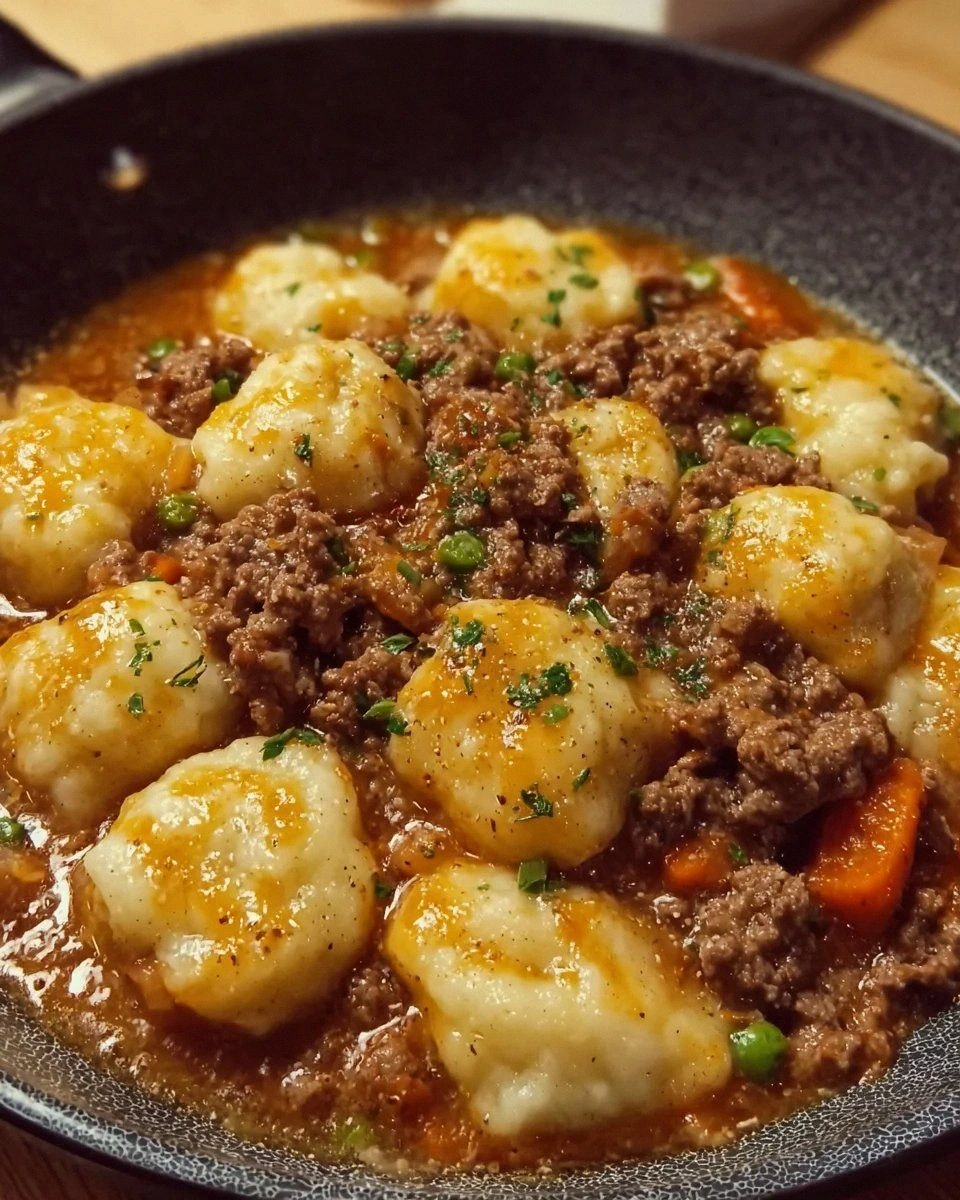
The kitchen quickly turned into a symphony of sizzles, aromatic whispers, and that unmistakable hum of anticipation. The olive oil hit the pan with a confident sizzle that sounded like applause, while the onions softened, releasing a sweet perfume that reminded me of a summer market stall. The ground beef browned, its edges caramelizing into little pockets of umami that seemed to wink at me, promising a richness that would later coat each dumpling like a velvet blanket. When the tomato paste joined the party, a deep, slightly tangy note rose, turning the sauce into a glossy, ruby‑red river that begged to be spooned over everything.
What makes this version stand out is not just the ingredients—it’s the choreography. I’ve taken the classic comfort of a meat‑and‑dumpling stew and given it a few daring twists that most recipes completely miss. Think of the thyme and paprika as the secret backstage crew, adding subtle depth while the dumplings rise like fluffy clouds, thanks to a pinch of baking powder that works like a culinary magician. And yes, I’m about to confess that I ate half the batch before anyone else could even peek—because once you taste that first spoonful, you’ll understand why this is hands down the best version you’ll ever make at home.
Let me walk you through every single step — by the end, you’ll wonder how you ever made it any other way. Okay, ready for the game‑changer? This next part? Pure magic. I dare you to taste this and not go back for seconds. Stay with me here — this is worth it.
What Makes This Version Stand Out
- Flavor Depth: The combination of tomato paste, dried thyme, and a hint of paprika creates a sauce that coats the beef and dumplings like a silky, savory glaze.
- Texture Contrast: Juicy, slightly caramelized beef meets pillowy dumplings that rise dramatically, giving you that satisfying bite‑and‑crunch without any chewiness.
- Simplicity: All the ingredients are pantry staples, and the technique only requires one pot, making cleanup a breeze.
- Unique Twist: Adding a splash of milk to the dumpling dough keeps them tender, while the butter adds richness that most recipes forget.
- Crowd Reaction: I’ve served this at family gatherings and watched grown‑ups turn into kids again, begging for “just one more bite.”
- Ingredient Quality: Using 85% lean ground beef ensures juicy flavor without excess grease, striking the perfect balance.
- Cooking Method: The gentle simmer after adding the broth allows the flavors to meld, while the dumplings steam to perfection on top.
- Make‑Ahead Potential: This dish freezes beautifully, and reheating revives the same comforting texture, making it perfect for meal prep.
Alright, let's break down exactly what goes into this masterpiece...
Inside the Ingredient List
The Flavor Base
Ground Beef: I prefer 85% lean for the juicy flavor, but you can go leaner if you like. This ratio gives enough fat to render a rich, buttery mouthfeel without drowning the dish in grease. If you skip the fat, the sauce will feel thin and the dumplings won’t have that comforting heft. A good tip: pat the beef dry with paper towels before browning to ensure a proper sear.
Olive Oil: Just a tablespoon if you’re using lean beef helps with sautéing. The oil creates a glossy base that prevents the onions from sticking and adds a subtle fruitiness. If you’re out of olive oil, a neutral oil like canola works just as well, though you’ll lose a touch of that Mediterranean nuance.
Onion: A small, diced onion gives that essential sweetness and depth. The sugars caramelize as they soften, forming the backbone of the sauce. For a sweeter profile, try a shallot or a mix of red and white onions.
Garlic: Minced garlic adds a punch; I always use more than one clove for extra flavor! If you love garlic, feel free to double it—just be careful not to burn it, or you’ll get a bitter edge.
The Texture Crew
All‑Purpose Flour: Two tablespoons help thicken the gravy while the dumpling recipe requires more. Flour acts as a binder for the dumplings and a thickener for the sauce, creating that luxurious, spoon‑coating consistency. If you’re gluten‑free, substitute with a 1:1 gluten‑free flour blend, but you may need a little extra to achieve the same texture.
Beef Broth: You want 1½ cups of this liquid gold to create that luscious sauce. The broth supplies depth, umami, and the perfect amount of moisture for the dumplings to steam. Homemade broth is ideal, but a low‑sodium store‑bought version works just fine.
Dried Thyme: Just a pinch enhances the aroma and flavor profile. Thyme’s earthy notes balance the richness of the beef, and a little goes a long way. If you’re fresh‑herb obsessed, use a teaspoon of fresh thyme leaves instead.
Paprika: A half teaspoon gives it a warm touch; optional, but trust me—it’s worth it! The subtle smoky undertone lifts the whole dish, making it feel more layered. Smoked paprika can be used for an even deeper flavor.
The Unexpected Star
Frozen Peas or Mixed Vegetables: These are totally optional but add vibrant color and nutrition. They pop into the pot at the end, retaining a bright green that makes the dish look as good as it tastes. If you’re a veggie lover, toss in a handful of corn or diced carrots for extra sweetness.
Salt and Pepper: Basic yet crucial for seasoning to taste. Salt awakens the flavors, while pepper adds a gentle heat. Always season in layers—first when browning the beef, then again after adding the broth.
The Final Flourish
Baking Powder: This makes the dumplings rise, ensuring they are fluffy! The leavening action creates air pockets that give each dumpling a cloud‑like interior. Too much powder can make them taste metallic, so stick to the recommended amount.
Butter: Some softened butter adds richness to the dumpling dough. Butter coats the flour particles, preventing over‑development of gluten and contributing to a tender crumb. If you’re dairy‑free, substitute with a plant‑based butter, though the flavor will shift slightly.
Milk: Whole or 2% milk moistens the dumpling mixture perfectly. Milk adds a subtle sweetness and helps bind the dough, while the fat content keeps the dumplings moist. For a lighter version, use skim milk, but expect a slightly drier texture.
Everything's prepped? Good. Let's get into the real action...
The Method — Step by Step
Heat a large, heavy‑bottomed pot over medium‑high heat and drizzle the tablespoon of olive oil. Once the oil shimmers, add the diced onion and sauté for 3‑4 minutes until it turns translucent and begins to caramelize. You’ll hear a gentle sizzle that sounds like tiny fireworks—this is the first flavor foundation building.
Kitchen Hack: Add a pinch of sugar with the onions; it accelerates caramelization and deepens the sweetness without making the dish sugary.Push the onions to the side of the pot, then add the ground beef. Break it up with a wooden spoon, letting it brown evenly. You’ll notice the beef releasing a rich, meaty aroma that fills the kitchen, a scent that says “comfort is on its way.” Sprinkle a generous pinch of salt and pepper at this stage; this seasons the meat from the inside out.
When the beef is mostly browned, stir in the minced garlic and tomato paste. Cook for another 2 minutes, allowing the paste to darken slightly—this is the moment the sauce starts to gain that deep, umami backbone. If the mixture looks too thick, splash in a splash of broth to deglaze, scraping up any browned bits stuck to the pot.
Sprinkle the two tablespoons of all‑purpose flour over the meat mixture, stirring constantly to form a roux. This step is crucial: the flour will absorb the fats and create a velvety base that later thickens into a luscious gravy. Cook the roux for about a minute; you’ll see it turn a light golden color, and the kitchen will be filled with a faint toasted scent.
Gradually whisk in the 1½ cups of beef broth, ensuring there are no lumps. As the liquid incorporates, the sauce will begin to bubble and thicken, coating the bottom of the pot like a glossy blanket. Add the dried thyme, paprika, and a dash more salt if needed. At this point, the sauce should smell warm and inviting, like a cozy fireplace on a cold night.
Now, it’s time for the dumplings. In a large mixing bowl, combine 2 cups of flour, 2 teaspoons of baking powder, and a pinch of salt. In a separate cup, melt 2 tablespoons of butter, then stir in ½ cup of milk until the butter is fully incorporated. Pour the wet mixture into the dry ingredients and stir just until a shaggy dough forms—over‑mixing will make the dumplings tough.
Watch Out: If the dough feels too sticky, add a tablespoon of flour at a time; too much flour will make the dumplings dense.Drop spoonfuls of the dumpling dough (about the size of a walnut) onto the simmering sauce. The dumplings should sit on top, not submerged, allowing them to steam as the sauce bubbles gently beneath them. Cover the pot with a tight‑fitting lid and let them cook for 12‑15 minutes. You’ll hear a faint hissing as steam escapes—this is the sound of fluffy clouds forming.
After the dumplings have puffed up, stir in the frozen peas or mixed vegetables, letting them heat through for another 3 minutes. The peas will turn a vibrant green, adding a pop of color that makes the dish look as inviting as it tastes.
Give the entire pot one final gentle stir, taste, and adjust seasoning if necessary. The sauce should be thick enough to coat the back of a spoon, and the dumplings should be light, pillowy, and just slightly firm to the bite. Serve hot, and watch as the steam carries the scent of thyme and beef across the table.
Kitchen Hack: For an extra golden top, brush the dumplings with a little melted butter during the last 2 minutes of cooking.
That's it — you did it. But hold on, I've got a few more tricks that'll take this to another level...
Insider Tricks for Flawless Results
The Temperature Rule Nobody Follows
Never start the dumplings in a rolling boil; a gentle simmer is the secret. High heat can cause the dumplings to burst, releasing starch that makes the sauce gummy. Keep the pot at a steady low simmer, and you’ll get dumplings that stay intact, with a tender interior that melts in your mouth.
Why Your Nose Knows Best
When the sauce reaches the perfect thickness, it will emit a fragrant, almost sweet aroma that signals it’s ready. Trust that nose cue more than the clock. If you smell a hint of caramelized onion and a whisper of thyme, you’re golden. I once timed it too long and ended up with a sauce that tasted “cooked down” – a lesson learned the hard way.
The 5‑Minute Rest That Changes Everything
After you turn off the heat, let the pot sit, covered, for five minutes. This rest allows the dumplings to finish steaming and the flavors to meld further. Skipping this step is like cutting a steak before it rests – you lose juiciness and depth.
Butter‑Boosted Dumpling Dough
Adding softened butter to the dumpling dough, as we do, creates a richer crumb. The butter coats the flour particles, limiting gluten formation and giving you that melt‑in‑your‑mouth texture. If you’re feeling indulgent, swap half the butter for a spoonful of cream cheese for an even silkier bite.
Freezer‑Friendly Hack
Portion the uncooked dumpling dough into a freezer‑safe bag, flatten it into a sheet, and freeze. When you’re ready to cook, just drop the frozen nuggets straight into the simmering pot—no thawing required. The dumplings will puff up just as beautifully, and you’ll have a ready‑made comfort meal in minutes.
Creative Twists and Variations
This recipe is a playground. Here are some of my favorite ways to switch things up:
Spicy Southwest
Swap the paprika for smoked chipotle powder and add a diced jalapeño with the onions. Finish with a splash of lime juice just before serving. The result is a bold, smoky heat that pairs perfectly with the beef’s richness.
Herbaceous Garden
Replace thyme with fresh rosemary and add a handful of chopped kale or spinach at the end of cooking. The green veggies add earthiness, while rosemary gives a piney aroma that lifts the dish to a springtime delight.
Cheesy Delight
Stir in a cup of shredded sharp cheddar or Gruyère into the sauce just before the dumplings finish cooking. The cheese melts into the gravy, creating a luxuriously creamy texture that’s pure comfort.
Asian Fusion
Swap beef broth for low‑sodium chicken broth, add a tablespoon of soy sauce, and incorporate a teaspoon of ginger paste with the garlic. Garnish with sliced scallions and a drizzle of sesame oil for an umami‑packed twist.
Vegetarian Version
Replace the ground beef with a plant‑based ground “beef” or crumbled tempeh, and use vegetable broth. The dumplings stay the same, and you still get that hearty, satisfying stew without the meat.
Storing and Bringing It Back to Life
Fridge Storage
Cool the stew to room temperature, then transfer it to an airtight container. It will keep for up to 4 days in the refrigerator. When reheating, add a splash of water or broth and stir gently over low heat to revive the sauce’s silky texture.
Freezer Friendly
Portion the entire dish (including dumplings) into freezer‑safe containers, leaving a little headspace for expansion. Freeze for up to 3 months. To reheat, thaw overnight in the fridge, then warm on the stove over medium heat, adding a splash of milk to bring back that creamy richness.
Best Reheating Method
Use a gentle simmer on the stovetop rather than a microwave. This prevents the dumplings from becoming rubbery. Add a teaspoon of water per cup of stew, cover, and stir occasionally until everything is heated through and the sauce regains its glossy sheen.