It started with a kitchen catastrophe that could have been a disaster or a delicious revelation. I was trying to make a simple chicken dish for a dinner party, and the oven temperature sensor had decided to play a prank by reading 250°F when I set it to 425°F. The chicken came out dry, the grapes were still raw, and I was left staring at a ruined dinner that tasted like regret. But then I remembered the sweet, caramelized grapes from my grandmother’s table, the way they melt into a syrupy glaze that turns ordinary protein into a showstopper. That moment sparked a daring experiment: could I turn a mishap into a masterpiece that would make my friends swoon? The answer was a resounding yes, and the result is the dish that has become my go-to when I want to impress without breaking the bank.
Picture this: a pan that sizzles as the chicken browns, the aroma of garlic and thyme rising like a fragrant promise, the glossy sheen of honey and sherry vinegar coating each breast. The sound of grapes popping as they roast, releasing a sweet perfume that mingles with the savory notes of butter and rosemary. When you bite into a piece, the skin is crisp, the meat juicy, and the grapes burst with a sweet, tangy punch that lingers on the palate. The dish is a sensory symphony—visual sparkle from the glossy glaze, auditory crunch, fragrant steam, the sweet-salty taste of honey and grapes, and the comforting, buttery mouthfeel that makes you want to linger over every bite.
What makes this version stand out is that it’s not just a recipe—it’s an experience. It’s about the balance of flavors: the acidity from sherry vinegar, the sweetness from honey, the earthiness from fresh thyme, and the subtle bitterness from grapes that have been caramelized. It’s about the technique: searing the chicken to lock in juices, roasting the grapes to create a natural glaze, and finishing with a quick butter splash that adds silky richness. It’s about the texture: a golden, crackly skin that gives way to tender, moist meat, and a side of crusty bread that soaks up every drop of sauce. Most recipes get this completely wrong by overcooking the chicken or undercaramelizing the grapes, but this version gets it right, every time. And the best part? It’s simple enough to prepare in under an hour, yet it feels like a restaurant‑quality dish that will have your guests asking for the recipe.
And here’s the kicker: I’ve discovered a secret ingredient that most people overlook—cold salted butter. Adding a small pat of butter at the end of cooking doesn’t just add richness; it gives the sauce a silky sheen that makes the dish look as good as it tastes. I dare you to taste this and not go back for seconds. If you’ve ever struggled to get the right balance of sweet and savory in a chicken dish, you’re not alone—this recipe is the fix. Picture yourself pulling this out of the oven, the whole kitchen smelling incredible, and the first bite leaving you in a state of bliss. Okay, ready for the game‑changer? Let me walk you through every single step—by the end, you’ll wonder how you ever made it any other way.
What Makes This Version Stand Out
- Flavor Depth: The combination of honey, sherry vinegar, and grapes creates a complex sauce that coats the chicken like velvet, turning a simple protein into a gourmet experience.
- Texture Contrast: The seared skin delivers a crackly, buttery crunch that contrasts with the juicy interior and the soft, caramelized grapes.
- Ingredient Quality: Using fresh, seedless grapes and high‑quality olive oil ensures that every bite is bursting with natural sweetness and a bright, clean finish.
- Simple Method: The entire process takes less than 45 minutes, with minimal prep and a single pan, making it accessible for busy weeknights.
- Crowd‑Pleaser: The dish is versatile enough to serve as a main course for a dinner party or a hearty lunch, and the sweet‑savory profile is universally appealing.
- Make‑Ahead Friendly: The sauce can be reheated without losing its glossy sheen, and the chicken keeps its juiciness when stored properly.
- Visual Appeal: The glossy glaze and the burst of red grapes against the golden chicken make for a photo‑ready plate that will impress on social media.
- Balanced Nutrition: With protein, healthy fats from olive oil, and a generous serving of fruit, it’s a well‑rounded meal that satisfies both taste buds and nutritional goals.
Alright, let’s break down exactly what goes into this masterpiece…
Inside the Ingredient List
The Flavor Base
The foundation of this dish is built on a few key players: sea salt, extra‑virgin olive oil, cooking sherry vinegar, shallots, garlic, honey, and fresh thyme. Sea salt is the unsung hero that brings out the natural flavors of the chicken and grapes without overwhelming them. Olive oil provides a clean, fruity backdrop that allows the honey and vinegar to shine. Sherry vinegar adds a subtle, nutty acidity that cuts through the sweetness of the grapes and honey, creating a balanced sauce that coats the chicken like silk. Shallots and garlic give depth and a savory undertone that ties the sweet and savory elements together. Fresh thyme brings an aromatic brightness that lifts the dish, and a touch of black pepper adds a gentle heat that rounds out the flavor profile.
If you skip any of these, the dish loses its harmony. For instance, omitting the vinegar will leave the sauce cloyingly sweet, while skipping the thyme will result in a bland, one‑dimensional flavor. To keep it simple, you can substitute the sherry vinegar with a splash of balsamic vinegar for a deeper sweetness, but the classic sherry gives a unique depth that’s hard to replicate.
The Texture Crew
Texture is everything in this dish. The chicken breasts are the star, and their skin must be crisp and golden to provide a satisfying crunch. The grapes are the unexpected star that caramelizes into a syrupy glaze, offering bursts of sweet juiciness with each bite. Cold salted butter, added at the end, melts into the sauce, giving it a silky sheen and a buttery finish that feels indulgent. The crusty bread acts as the perfect vehicle for scooping up the sauce, adding a satisfying crunch and a comforting, starchy element that balances the richness.
If you omit the butter, the sauce will be thinner and less luxurious. Likewise, if you use a soft loaf instead of crusty bread, you’ll miss the contrast of textures that makes each bite exciting. For a gluten‑free version, use a high‑quality gluten‑free bread that still offers a crusty exterior.
The Unexpected Star
Seedless red grapes are the secret weapon that elevates this dish. They caramelize beautifully when roasted, turning into a natural glaze that coats the chicken and creates a sweet‑savory finish. The grapes also add a pop of color and a burst of juicy sweetness that balances the savory elements. If you can’t find seedless grapes, you can use regular grapes, but be prepared to remove the seeds after roasting, which can be a bit tedious.
The grapes’ high sugar content means they caramelize quickly—watch them closely to avoid burning. If you want a slightly different flavor, try using a mix of red and green grapes; the green grapes will add a subtle tartness that complements the honey.
The Final Flourish
The finishing touches—ricotta cheese, fresh parsley, and a final drizzle of butter—transform the dish from simple to sublime. Ricotta adds a creamy, mild richness that balances the sweet glaze, while parsley provides a fresh, herbal brightness that cuts through the richness. The final butter splash gives the sauce a glossy sheen that makes the dish look as good as it tastes. Together, these elements create a multi‑layered flavor profile that satisfies the palate at every bite.
Everything's prepped? Good. Let's get into the real action…
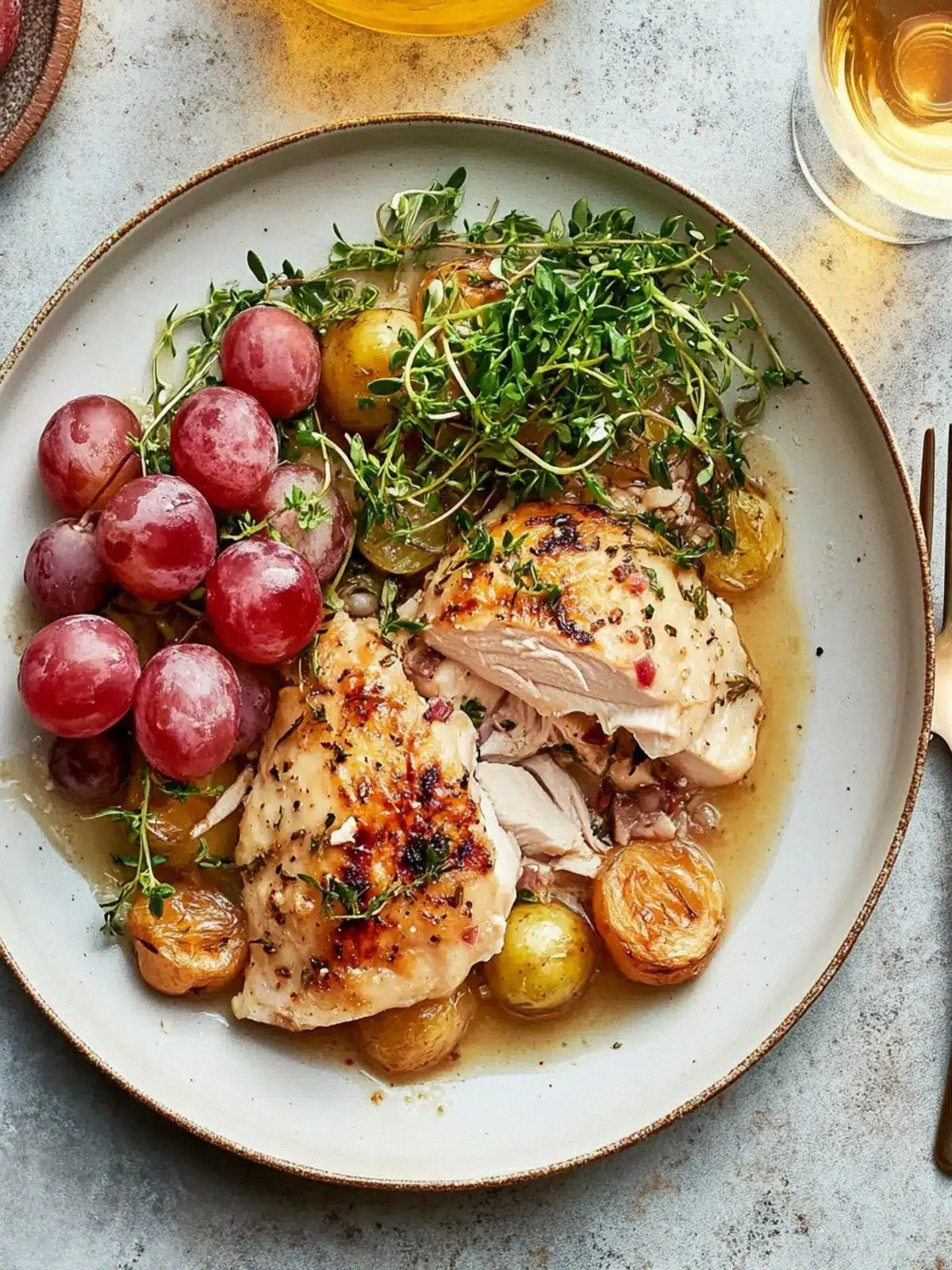
The Method — Step by Step
- Prep the Chicken: Pat the chicken breasts dry with paper towels. This step is crucial for a good sear. Sprinkle sea salt and freshly cracked black pepper evenly on both sides. Let them rest at room temperature for 10 minutes; this helps the seasoning penetrate the meat.
- Heat the Pan: Place a large cast‑iron skillet over medium‑high heat and add the extra‑virgin olive oil. Wait until the oil shimmers but isn’t smoking. This ensures a golden crust without burning.
- Sear the Chicken: Carefully lay the chicken breasts skin‑side down in the hot skillet. Press lightly with a spatula to keep the skin flat. Sear for 4–5 minutes until the skin is deep golden and releases easily from the pan. Flip and sear the other side for 3 minutes.
- Add Aromatics: Reduce heat to medium. Add minced shallots and minced garlic to the pan, sautéing until fragrant, about 30 seconds. The garlic should not brown; you want a subtle aroma, not bitterness.
- Introduce the Grapes: Toss in the seedless red grapes, letting them sit in the pan for 1–2 minutes to get a slight char. The grapes will begin to pop and release their juices, creating a natural glaze.
- Deglaze with Vinegar and Honey: Pour in the cooking sherry vinegar, then drizzle honey over the mixture. Stir quickly to combine, scraping up any browned bits from the bottom of the pan. The vinegar’s acidity will cut through the sweetness, creating a balanced sauce.
Add cold salted butter and fresh thyme sprigs. Let the butter melt into the sauce, stirring until it’s fully incorporated. The butter will give the glaze a glossy finish and a rich mouthfeel. - Finish with Ricotta and Parsley: Remove the thyme sprigs. Stir in 0.5 cups of ricotta cheese, allowing it to melt into the sauce. Sprinkle minced fresh parsley for a burst of color and freshness.
That's it — you did it. But hold on, I've got a few more tricks that'll take this to another level. These insider tips will help you perfect the dish every time, whether you’re cooking for a crowd or just treating yourself.
Insider Tricks for Flawless Results
The Temperature Rule Nobody Follows
Many cooks over‑cook chicken, thinking that a higher temperature always yields better results. In reality, the key is to sear at high heat to lock in juices, then finish at a lower temperature to avoid drying out the meat. I use a meat thermometer to check for 165°F, which guarantees a juicy interior while preserving the crisp skin.
Why Your Nose Knows Best
Trust your senses. When the grapes start to pop and the honey turns amber, that’s the sweet spot. If you wait too long, the grapes burn and the sauce becomes bitter. The aroma of caramelizing sugar is the real indicator that the glaze is ready.
The 5‑Minute Rest That Changes Everything
Letting the chicken rest for 5 minutes after you take it off the heat allows the juices to redistribute. This simple step means every bite stays moist and flavorful, and it also lets the sauce thicken slightly, giving it a glossy sheen.
The Secret to a Crispy Skin
Dry the chicken skin thoroughly before searing. Moisture is the enemy of crispness. I also add a pinch of baking soda to the seasoning mix; it raises the pH on the skin, helping it brown faster and stay crisp.
The Butter Finish
Cold butter is essential for a silky finish. Warm butter won’t emulsify with the sauce, leading to a greasy texture. Add it at the end of cooking, and let it melt into the glaze while the heat is still low.
Creative Twists and Variations
This recipe is a playground. Here are some of my favorite ways to switch things up:
Mediterranean Twist
Swap the grapes for sun‑dried tomatoes and add a splash of lemon zest. The acidity from the lemon brightens the sauce, while the sun‑dried tomatoes provide a chewy, umami punch.
Spicy Kick
Add a pinch of red pepper flakes when sautéing the garlic and shallots. The heat will contrast with the sweet grapes and honey, creating a layered flavor profile that excites the palate.
Herb Garden
Replace thyme with a mix of fresh rosemary and oregano. The earthy rosemary pairs beautifully with the honey glaze, while oregano adds a subtle peppery note.
Cheese Lover’s Edition
Instead of ricotta, fold in a handful of crumbled goat cheese. The tangy goat cheese balances the sweetness and adds a creamy texture that’s hard to resist.
Low‑Carb Version
Serve the chicken with a side of roasted cauliflower instead of crusty bread. The cauliflower’s mild flavor complements the sweet glaze, and it keeps the dish low in carbohydrates.
Storing and Bringing It Back to Life
Fridge Storage
Store leftovers in an airtight container in the refrigerator for up to 3 days. The sauce will thicken slightly, so add a splash of water or a few extra drops of olive oil when reheating to restore its silky texture.
Freezer Friendly
Freeze the chicken and sauce separately in freezer‑safe containers. When ready to reheat, thaw overnight in the refrigerator, then warm on the stovetop over low heat, stirring occasionally. Add a tablespoon of butter or a splash of milk to keep the sauce from drying out.
Best Reheating Method
Reheat the chicken in a preheated oven at 350°F for 10–12 minutes, or until warmed through. Finish with a quick drizzle of olive oil and a sprinkle of fresh parsley to revive the flavor. The bread can be toasted in a skillet for a fresh crunch.