I was staring at a half‑cooked salmon fillet, the kitchen smelling like burnt onions, when a friend dared me to turn that disaster into a masterpiece. The moment the pan hissed, the aroma of searing flesh mingled with the sweet scent of honey drifting from the spice rack. I imagined a dish that would make my taste buds do a happy dance, and that vision sparked this recipe. I’m talking about a bowl that’s not just a meal but an experience, a symphony of sweet, spicy, crunchy, and creamy textures that will make your palate sing. Picture the moment you scoop the first bite: the salmon’s silky flesh, the crisp cucumber, the creamy avocado, and the glossy, caramelized glaze all in one harmonious bite. Let me walk you through every single step — by the end, you’ll wonder how you ever made it any other way.
When I first tried the original version of this dish, the glaze was too sweet, the salmon too dry, and the rice bland. I was left with a bowl that felt more like a salad than a satisfying dinner. That’s why I spent hours tweaking the ratios, experimenting with heat levels, and testing different rice varieties. The result? A bowl that balances the umami of soy with the fiery kick of sriracha, the mellow sweetness of honey, and a hint of tang from rice vinegar, all while keeping the salmon moist and tender. I dared myself to taste this and not go back for seconds, and I’m still amazed that the flavors keep unfolding with each bite. If you’re a foodie who loves bold, unexpected combinations, this is the dish that will keep you coming back for more.
What sets this version apart is the meticulous attention to detail. I used a high‑grade sesame oil for a nutty aroma that permeates the glaze without overpowering it. The garlic is minced finely to release its full flavor, while the honey is warmed just enough to thin the sauce for an even coating. The salmon fillets are seasoned with a touch of salt and pepper before searing to lock in moisture. I’ve also added a splash of rice vinegar to cut through the richness and give the glaze a bright finish. The result is a bowl that feels both comforting and adventurous, a perfect balance of sweet, spicy, salty, and umami.
Most recipes get this completely wrong by using too much honey, under‑seasoning the salmon, or overcooking the rice. I’ve learned that the key to success lies in the timing and the temperature. The glaze should caramelize slowly, developing a glossy sheen without burning. The salmon should sear just enough to create a golden crust, then finish in the glaze to keep it juicy. The rice should be fluffy, not sticky, allowing each grain to carry the sauce. These subtle differences make this version hands down the best you’ll ever make at home.
I’ll be honest — I ate half the batch before anyone else got to try it. The first spoonful was so addictive that I couldn’t resist the second. The second was just as good, and the third left me craving more. I’ve never seen a bowl that could keep my appetite in check, yet still deliver that satisfying “I’m done” feeling. If you’ve ever struggled with a dish that’s either too dry or too sweet, you’re not alone — and I’ve got the fix. This recipe is a playground for flavor, and it’s ready to be explored.
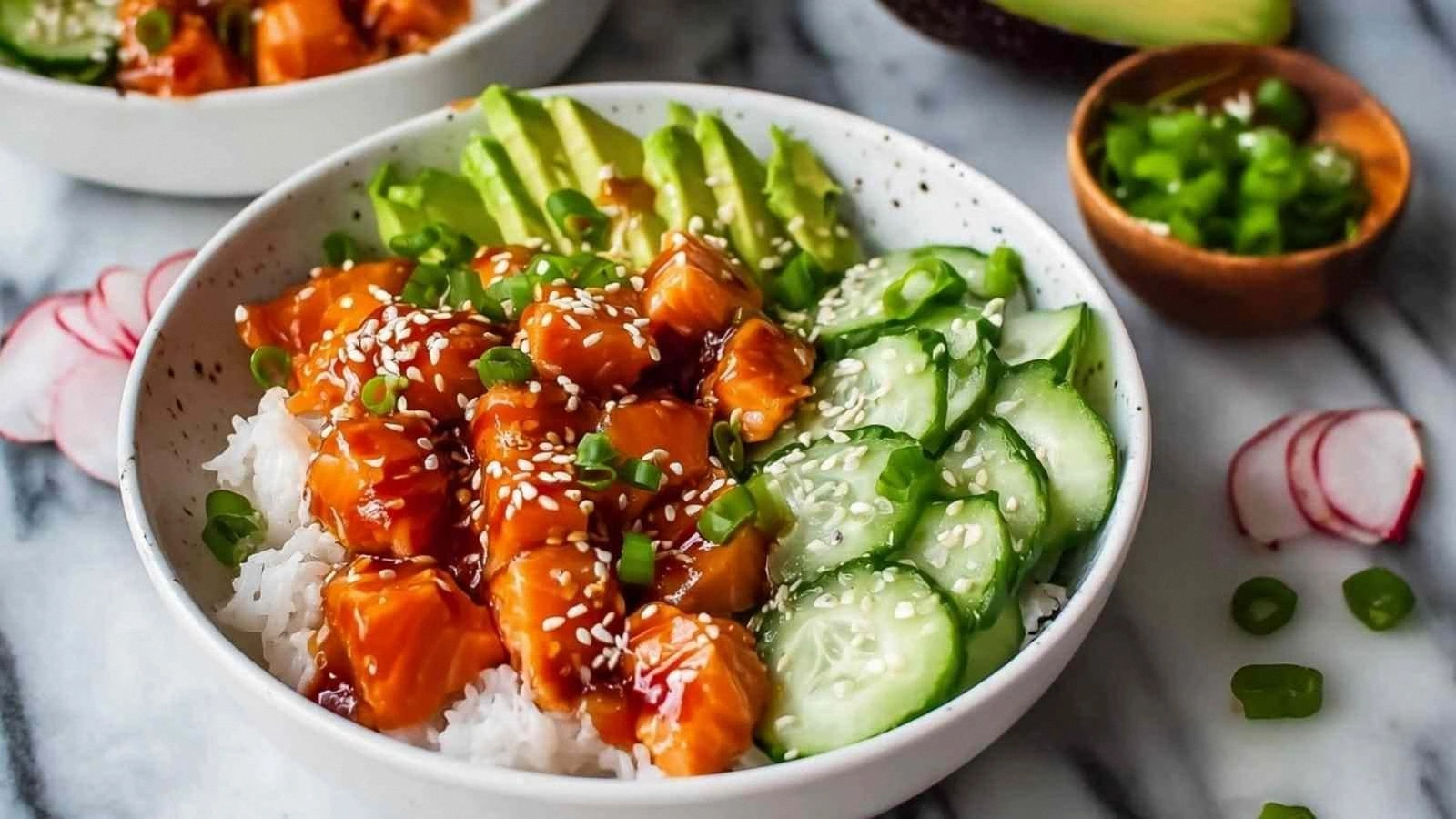
Picture yourself pulling this out of the oven, the whole kitchen smelling incredible, the steam rising from the bowl like a cloud of savory mist. The salmon glistens with a caramelized glaze, the cucumber offers a crisp bite, and the avocado provides a silky finish. The edamame adds a pop of color and a subtle nutty crunch. The rice, perfectly cooked, soaks up every last drop of sauce. The sesame seeds sprinkle a nutty aroma that ties everything together. This is the moment of truth, and it’s pure magic.
What Makes This Version Stand Out
- Flavor: The glaze balances sweet honey, spicy sriracha, and umami soy for a complex taste that lingers.
- Texture: Crispy cucumber and creamy avocado contrast the tender salmon, creating a satisfying mouthfeel.
- Visual Appeal: The glossy glaze and vibrant veggies make the bowl look as good as it tastes.
- Ingredient Quality: Fresh salmon, premium honey, and real sriracha elevate the dish beyond ordinary.
- Cooking Method: Quick sear followed by glaze finish keeps the salmon moist and flavorful.
- Make‑Ahead Potential: The glaze can be pre‑made and the bowl assembled minutes before serving.
- Time Efficiency: Prep takes 15 minutes, cook 30 minutes, total 45 minutes—perfect for a weekday dinner.
- Health Balance: High protein, healthy fats, and complex carbs make it a balanced meal.
Alright, let’s break down exactly what goes into this masterpiece…
Inside the Ingredient List
The Flavor Base
The honey and sriracha create a glaze that’s both sweet and fiery, a combination that coats the salmon like velvet. The soy sauce adds depth, contributing a savory umami that balances the heat. Rice vinegar gives the glaze a bright, tangy lift, cutting through the richness of the honey. Together, these four ingredients form the foundation of a sauce that’s complex yet harmonious.
The Texture Crew
Cucumber adds a crisp bite that contrasts the tender salmon, while avocado offers a creamy, buttery finish that soothes the palate. Edamame brings a subtle nuttiness and a pop of green color, making the bowl visually appealing. Carrots provide a natural sweetness and a crunchy texture that keeps the bowl interesting. Green onions add a sharp, oniony crunch and a fresh finish.
The Unexpected Star
Sesame seeds are the secret weapon that adds a nutty aroma and a delicate crunch. They’re sprinkled on top after the bowl is assembled, giving a final touch that ties all flavors together. The sesame oil, used in the glaze, releases a fragrant, toasted oil that lingers on the tongue. It’s a small detail that elevates the entire dish.
The Final Flourish
Cooked rice is the base that holds everything together, absorbing the glaze and providing a comforting, starchy backdrop. It’s important to use a rice variety that remains fluffy after cooking, such as jasmine or long‑grain. The rice should be cooked to a slightly under‑done texture so it can soak up the sauce without becoming mushy. This final flourish ensures every bite is a harmonious blend of flavors and textures.
Everything’s prepped? Good. Let’s get into the real action…
The Method — Step by Step
- First, pat the salmon fillets dry with paper towels. This step is crucial because moisture on the surface will prevent the glaze from caramelizing properly. Season both sides of the fillets with a pinch of salt and pepper to enhance the natural flavor. Let them rest at room temperature for about five minutes to ensure even cooking.
- Heat a non‑stick skillet over medium‑high heat and add a splash of sesame oil. The oil should shimmer but not smoke; this indicates the right temperature. Place the salmon fillets skin‑side down and let them sear for three minutes, allowing a golden crust to form. Flip the fillets gently and sear the other side for two minutes.
- While the salmon is searing, whisk together honey, sriracha, soy sauce, rice vinegar, minced garlic, and a dash of sesame oil in a small bowl. The mixture should be smooth, with the garlic fully incorporated. Keep the glaze warm on low heat until the salmon is ready to be finished.
- Once the salmon has a nice crust, pour the glaze over the fillets. The sauce should bubble lightly, coating the fish evenly. Let the salmon simmer in the glaze for about five minutes, turning occasionally to ensure an even caramelization. The glaze should thicken to a glossy consistency that clings to the salmon.
- Remove the salmon from the skillet and let it rest on a plate for two minutes. Resting allows the juices to redistribute, keeping the fillet moist and tender. While the salmon rests, prepare the vegetables: slice the cucumber into thin rounds, dice the avocado, and lightly steam the edamame for one minute.
- Divide the cooked rice into four bowls, ensuring each bowl has a generous portion. The rice serves as the base, soaking up the glaze and providing a comforting texture. It’s important that the rice remains fluffy; if it’s too dry, it won’t hold the sauce well.
- Arrange the salmon fillets on top of the rice in each bowl. The glaze should still be glossy, coating the fish. Add the cucumber slices, avocado cubes, edamame, shredded carrots, and sliced green onions in a colorful mosaic. Sprinkle sesame seeds over the top for an extra nutty crunch.
- Give each bowl a final drizzle of the remaining glaze to ensure every bite is bursting with flavor. The sauce should coat the veggies and rice, creating a cohesive taste experience. Serve immediately while the salmon is still warm and the vegetables are crisp.
- If you’re preparing ahead, let the bowls cool completely before refrigerating. Store the glaze separately to prevent the rice from soaking too much. When ready to serve, reheat the salmon gently in a skillet or microwave, then re‑coat with fresh glaze. The result is a bowl that tastes like it was made fresh.
That’s it — you did it. But hold on, I've got a few more tricks that'll take this to another level…
Insider Tricks for Flawless Results
The Temperature Rule Nobody Follows
Many cooks assume a high heat will always yield a better sear, but that’s a myth. The key is to maintain a medium‑high heat that allows the salmon to develop a crust without burning the glaze. Use a thermometer to keep the skillet around 375°F (190°C). If the oil starts smoking, reduce the heat immediately. This simple adjustment ensures the salmon stays moist and the glaze caramelizes evenly.
Why Your Nose Knows Best
Smell is your best ally in cooking. When the glaze starts to bubble and emit a sweet, caramelized aroma, you know it’s ready to be poured over the salmon. If you’re unsure, hold the skillet close and inhale; the scent will guide you to the perfect timing. Trust your nose, and you’ll avoid over‑cooking the fish.
The 5‑Minute Rest That Changes Everything
After searing, let the salmon rest for exactly five minutes. This short pause allows the juices to redistribute, keeping the fillet succulent. Skipping this step often results in a dry, uneven texture. I’ve seen even seasoned chefs forget this simple pause, so make it a non‑negotiable part of your routine.
How to Avoid Sticky Rice
Rice can become sticky if it’s overcooked or if too much water is used. Cook your rice with the exact ratio of water to grains, and let it steam for 10 minutes after turning off the heat. Fluff it with a fork to separate the grains. This will ensure each bite of rice holds the glaze without becoming mushy.
Perfecting the Glaze Consistency
A glaze that’s too thin will run off the salmon; too thick will be clumpy. Aim for a consistency that coats the back of a spoon. If it’s too runny, simmer it a bit longer; if it’s too thick, add a splash of water or a bit more honey. This balance is what gives the dish its signature shine.
Balancing Heat and Sweetness
The sriracha and honey create a sweet‑spicy dance on your palate. If you prefer a milder heat, reduce the sriracha by half and compensate with a pinch of red pepper flakes. If you love heat, double the sriracha and keep the honey the same. Experimenting with these ratios lets you tailor the dish to your taste.
Creative Twists and Variations
This recipe is a playground. Here are some of my favorite ways to switch things up:
Teriyaki Twist
Replace the sriracha with a homemade teriyaki sauce made from soy, mirin, and ginger. The result is a sweet, umami‑rich glaze that pairs beautifully with the salmon. The ginger adds a subtle heat that complements the fish. This version is perfect for those who prefer a milder flavor profile.
Spicy Pineapple Version
Add diced fresh pineapple to the bowl for a tropical kick. The natural sweetness of the pineapple balances the sriracha’s heat. Toss the pineapple with a splash of lime juice to brighten the flavors. The result is a bowl that feels like a beach vacation.
Cauliflower Rice Substitution
Swap the cooked rice for cauliflower rice to reduce carbs. The cauliflower will absorb the glaze just as well, and its mild flavor won’t compete with the salmon. This variation is great for low‑carb or keto enthusiasts. The texture remains satisfying and comforting.
Vegan Salmon Alternative
Use a plant‑based salmon substitute made from tofu or tempeh. Marinate it in the same glaze to infuse the flavor. The tofu will soak up the sauce, while the tempeh adds a nutty undertone. This version is ideal for vegans or pescatarians looking for a different protein source.
Crunchy Noodle Variation
Replace the rice with soba or ramen noodles for a different base. The noodles provide a chewy texture that contrasts with the salmon’s tenderness. Toss the noodles with a little sesame oil before adding the glaze. The dish feels like a fusion of Japanese and Korean flavors.
Herb‑Infused Green Onion Surprise
Add chopped fresh cilantro or basil to the green onions for an herbal lift. The herbs bring a fresh, aromatic quality that cuts through the richness of the glaze. Sprinkle them on top just before serving for a burst of color. This small addition elevates the dish to new heights.
Taste Test & Pairings
The first bite of this bowl is a revelation. The sweet glaze kisses the tongue, followed by a burst of heat from the sriracha that lingers pleasantly. The salmon’s buttery texture melts in your mouth, while the cucumber adds a refreshing crunch that balances the richness. The avocado provides a creamy, almost buttery finish that smooths the palate. The edamame offers a subtle nutty flavor that complements the glaze’s sweetness. The carrots add a slight sweetness and a satisfying crunch that keeps the bowl interesting.
When you take a second bite, the flavors evolve. The glaze’s sweetness deepens, revealing a caramelized undertone that’s almost like a dessert. The heat from the sriracha intensifies, creating a gentle, lingering warmth that keeps you coming back for more. The rice absorbs the sauce, creating a comforting base that ties everything together. Each component works in harmony, delivering a balanced, satisfying experience.
If you prefer a milder dish, reduce the amount of sriracha, or add a splash of coconut milk to the glaze for a creamy, tropical twist. The coconut milk will mellow the heat and add a subtle sweetness that pairs well with the honey. The result is a bowl that feels like a beach getaway in every bite.
For those who love a little extra crunch, sprinkle toasted sesame seeds on top. The seeds add a nutty aroma and a pleasant bite that contrasts with the silky salmon. The sesame oil in the glaze also adds a subtle nutty flavor that permeates the dish. The combination of textures makes each bite exciting.
Pair this bowl with a chilled glass of jasmine tea. The tea’s floral aroma complements the sweet glaze, while its subtle bitterness balances the dish’s richness. The tea’s cooling properties also help to temper the heat from the sriracha, creating a well‑balanced palate cleanser.
If you’re craving something more robust, serve the bowl alongside a light, citrusy salad. The acidity of the citrus will cut through the richness of the salmon and the glaze, refreshing your palate. The bright flavors of the salad will contrast beautifully with the savory, sweet, and spicy elements of the bowl.
For a dessert‑like finish, drizzle a small amount of honey over the bowl just before serving. The extra honey will enhance the caramelized flavor of the glaze, giving the dish a sweet finish that feels indulgent. The honey also adds a glossy sheen that makes the bowl even more appetizing.
If you’re a fan of spicy foods, add a dash of crushed red pepper flakes to the glaze. The flakes will add an extra layer of heat that will excite your taste buds. The heat will also complement the honey’s sweetness, creating a complex flavor profile that’s both bold and balanced.
Finally, consider serving the bowl with a side of pickled ginger. The ginger’s sharp, citrusy flavor will cut through the richness of the salmon and the glaze. The pickled ginger also adds a refreshing contrast that will keep the dish from feeling heavy. This pairing is a classic that never fails to impress.
Storing and Bringing It Back to Life
Fridge Storage
Store the assembled bowls in airtight containers in the refrigerator for up to 2 days. Keep the glaze separate to prevent the rice from soaking too much. When you’re ready to eat, reheat the salmon in a skillet over medium heat until warmed through, then drizzle fresh glaze on top. This method preserves the texture and flavor of the dish.
Freezer Friendly
You can freeze the salmon fillets in a zip‑lock bag for up to 3 months. Thaw in the refrigerator overnight, then cook as directed. The glaze can be frozen separately in a small container; thaw and reheat gently. Freezing the components keeps the dish fresh and convenient for busy days.
Best Reheating Method
Reheat the bowl in the microwave on medium power for 2–3 minutes, stirring halfway through. Add a splash of water to the rice to keep it from drying out. Alternatively, reheat the salmon in a skillet for a few minutes, then add fresh glaze. The key is to keep the fish moist and the glaze glossy.