I remember the night I was juggling three pots on the stove, a pot of pasta, a skillet of sautéed onions, and a bag of fresh zucchini I’d just pulled from the garden. The kitchen smelled of garlic, basil, and a faint hint of lemon, but my eyes were glued to the sizzling pan. Halfway through, the onions went from translucent to burnt, and my pasta turned into a sticky mess. I stared at the charred edges, feeling the sting of disappointment, when a friend called from the other side of town, “You need a simple, fresh fix for tonight?”
That call sparked a culinary experiment. I grabbed my zucchini, tomatoes, and a handful of basil, and I vowed to turn a kitchen calamity into a masterpiece. Picture this: a skillet that transforms raw veggies into a silky, tomato‑rich sauce that coats everything like velvet, while the zucchini slices crisp into golden edges that crackle like thin ice. The aroma alone—garlic, oregano, and the bright citrus of lemon—fills the air and makes your mouth water before you even taste the first bite.
What makes this version stand out is the balance of flavors and textures, the simplicity of ingredients, and a few clever twists that elevate the dish from ordinary to unforgettable. I dared you to taste this and not go back for seconds, and I’m here to prove it’s hands down the best version you’ll ever make at home. If you’ve ever struggled with overcooked zucchini or bland tomato sauce, you’re not alone—and I’ve got the fix. Let me walk you through every single step—by the end, you’ll wonder how you ever made it any other way.
What Makes This Version Stand Out
- Taste: The combination of fresh tomatoes, zucchini, and basil creates a bright, herbaceous flavor that sings in the mouth. The subtle heat from a pinch of red pepper flakes adds a gentle kick without overpowering the dish.
- Texture: The zucchini achieves a delicate balance—crispy on the outside, tender inside—while the tomatoes break down into a silky sauce that clings to the veggies.
- Ingredient Quality: Using seasonal, locally sourced produce ensures every bite bursts with natural sweetness and depth.
- Ease: With only ten minutes of prep and a single skillet, this dish is perfect for busy nights or when you need a comforting meal in a hurry.
- Versatility: Serve it over pasta, quinoa, or crusty bread, or enjoy it as a side dish with grilled proteins.
- Make‑Ahead: The flavors only deepen after resting, so you can prepare this in advance and reheat for a quick dinner.
Alright, let’s break down exactly what goes into this masterpiece…
Inside the Ingredient List
The Flavor Base
Onion: The yellow onion is the aromatic foundation, providing sweetness that balances the acidity of the tomatoes. When sautéed until translucent, it releases a caramelized flavor that lingers through the dish. Skipping the onion would leave the sauce thin and lacking depth.
Garlic: Fresh garlic cloves add a punch of warmth and a subtle peppery note. Mince them finely to ensure they dissolve into the oil, creating a uniform flavor profile. If you’re sensitive to raw garlic, lightly sauté it with the onions to mellow its bite.
The Texture Crew
Zucchini: Zucchini is the star that delivers both crunch and moisture. Slice into rounds or dice, depending on your preference for bite. If you’re worried about overcooking, add the zucchini later in the process to keep it tender.
Olive Oil: A good quality extra‑virgin olive oil forms the base for sautéing and carries the herbs. It adds a fruity undertone that enhances the tomatoes’ natural sweetness. Using too little oil will cause the veggies to stick, while too much will dilute the flavors.
The Unexpected Star
Parmesan Cheese: A sprinkle of Parmesan adds a nutty, umami richness that coats the vegetables like a velvety sauce. It melts into the skillet, creating a slightly creamy texture without the heaviness of cream. If you’re vegan, try nutritional yeast for a similar cheesy note.
The Final Flourish
Basil: Fresh basil leaves finish the dish with a burst of aroma and a green, peppery freshness. Add them at the end to preserve their bright color and flavor. A handful of basil is enough; too much can overwhelm the other ingredients.
Lemon Juice: The acidity from lemon juice brightens the sauce and balances the tomatoes’ natural acidity. It also prevents the zucchini from turning mushy by cutting through the moisture. If you don’t have lemon, a splash of white wine vinegar works as a substitute.
Everything’s prepped? Good. Let’s get into the real action…
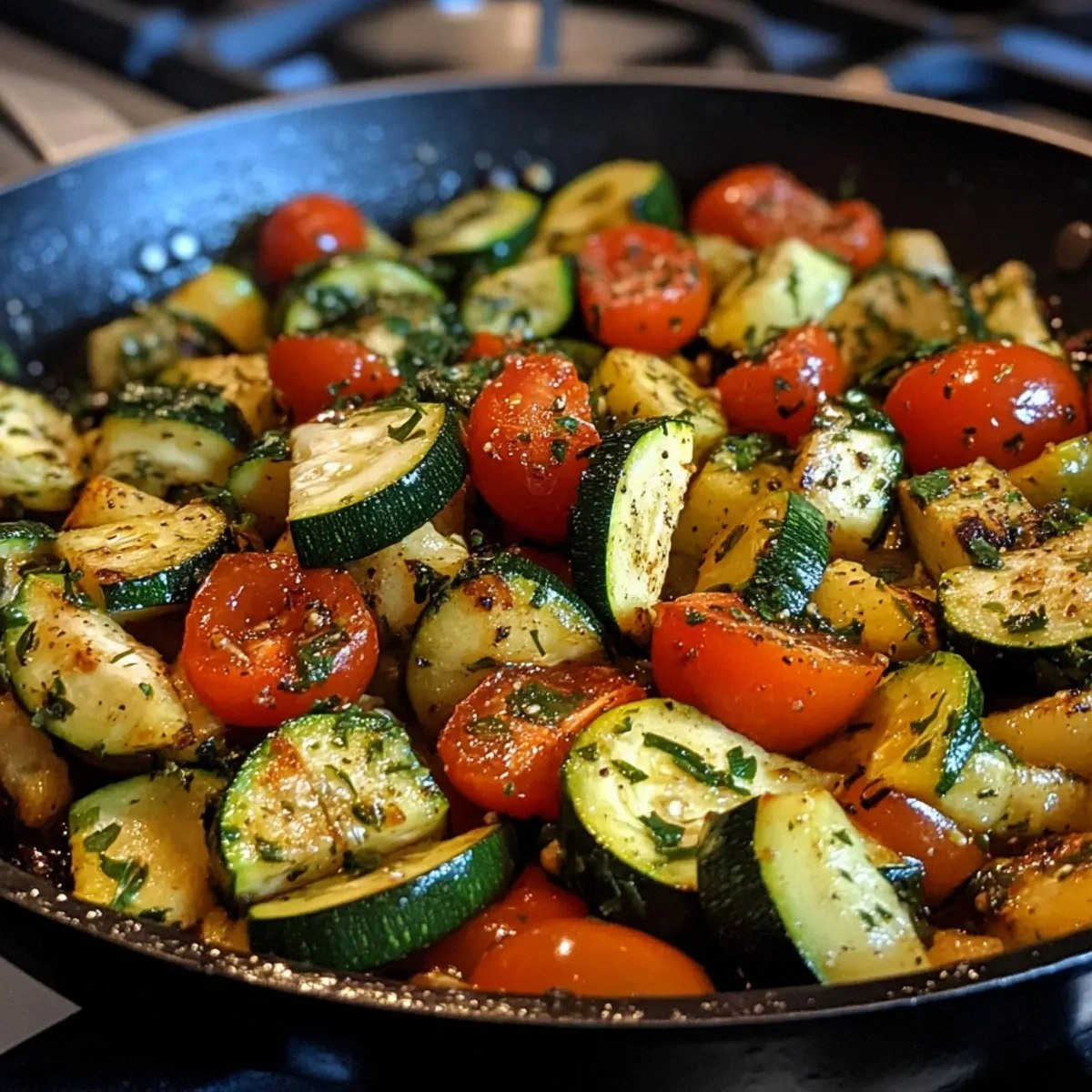
The Method — Step by Step
- Heat a large skillet over medium heat and pour in the olive oil. Let the oil shimmer, then add the sliced onions. Sauté until they turn translucent and start to caramelize, about 5 minutes. This is the moment of truth—watch the aroma rise and know the dish is on the right track.
- Add the minced garlic to the skillet and cook for 30 seconds, just until fragrant. Be careful not to burn it; a burnt garlic bite will ruin the balance. If you’re nervous, stir constantly to keep the garlic from sticking.
- Introduce the zucchini slices, stirring to coat them in oil and aromatics. Cook for 3-4 minutes until the edges begin to brown. The sizzling sound when the zucchini hits the pan? Absolute perfection.
- Add the diced tomatoes, oregano, and a pinch of red pepper flakes. Stir well, letting the tomatoes break down into a saucy mixture. The sauce should thicken slightly and emit a toasty scent.
- Reduce the heat to low, cover the skillet, and let everything simmer for 8 minutes. This step allows the flavors to marry and the zucchini to soften without becoming mushy.
- Uncover the skillet, add the fresh basil leaves, and stir. The basil should wilt slightly, releasing its aromatic oils. Watch the green leaves dance—this is pure magic.
- Sprinkle the Parmesan cheese over the top, allowing it to melt into the sauce. The cheese will create a silky coating that ties everything together. If you prefer a lighter version, omit the cheese or use a vegan alternative.
- Finish with a squeeze of lemon juice, adjusting the acidity to taste. Stir until the sauce is glossy and the flavors are balanced. Serve immediately, or let it rest for 5 minutes before plating.
That’s it— you did it. But hold on, I’ve got a few more tricks that’ll take this to another level…
Insider Tricks for Flawless Results
The Temperature Rule Nobody Follows
Cooking the zucchini at the right temperature keeps the edges crisp and the center tender. I always keep the heat on medium, not high, so the vegetables cook evenly without evaporating excess moisture. If you’re using a cast‑iron skillet, preheat it for a few minutes before adding oil.
Why Your Nose Knows Best
Before tasting, give the skillet a sniff. The aroma is your best indicator of doneness. If you smell a faint, fresh tomato scent, it’s ready. A burnt or overly strong garlic scent means you need to adjust the heat.
The 5‑Minute Rest That Changes Everything
Letting the dish rest for five minutes after cooking allows the flavors to settle and the sauce to thicken slightly. A friend once skipped this step and ended up with a watery sauce—lesson learned. Resting also lets the Parmesan melt fully.
Add a Splash of Water
If the sauce gets too thick, add a tablespoon of water to rehydrate it. This keeps the texture silky without diluting the flavor. A tiny splash of broth works as well for extra depth.
Use a Lid for Even Cooking
Cover the skillet during the simmering phase to trap steam, which helps the zucchini cook evenly. Removing the lid too early can cause uneven moisture distribution. Once the sauce is thick, remove the lid to let it reduce.
Season in Layers
Add salt and pepper after the sauce has simmered; this prevents the seasoning from becoming too salty early on. A pinch of red pepper flakes at the start adds heat, while a final pinch at the end intensifies the flavor. Layering seasonings ensures a balanced taste.
Creative Twists and Variations
This recipe is a playground. Here are some of my favorite ways to switch things up:
Mediterranean Medley
Swap the Parmesan for crumbled feta and add chopped olives. The saltiness of feta pairs beautifully with the bright tomato base. Serve over couscous for a Mediterranean twist.
Spicy Cajun Kick
Add a teaspoon of Cajun seasoning to the onions and garlic. The smoky heat complements the zucchini’s natural sweetness. Pair with grilled shrimp for a bold dinner.
Creamy Coconut Finish
Replace the lemon juice with a splash of coconut milk. The creamy texture balances the acidity of the tomatoes. This version works great over rice or as a side for curry.
Herb‑Infused Pesto
Stir in a spoonful of basil pesto before serving. The pesto adds a fresh, nutty layer of flavor. It also deepens the green color of the dish.
Roasted Tomato Twist
Roast the tomatoes at 400°F for 15 minutes before adding them to the skillet. The caramelized sugars intensify the sauce’s sweetness. This variation is perfect for fall when tomatoes are at their peak.
Cheesy Broccoli Boost
Add chopped broccoli florets in the last five minutes of cooking. The broccoli adds crunch and a nutritional punch. Top with extra Parmesan for a cheesy, veggie‑packed dish.
Storing and Bringing It Back to Life
Fridge Storage
Cool the skillet completely, then transfer the dish to an airtight container. Store in the refrigerator for up to 3 days. The flavors will deepen, making it even tastier the next day.
Freezer Friendly
Place the cooled dish in a freezer‑safe container, leaving a little headspace for expansion. Freeze for up to 2 months. Reheat in a skillet, adding a splash of water to keep it moist.
Best Reheating Method
Reheat on low heat, stirring frequently. Add a tiny splash of water before reheating—it steams back to perfection. Finish with a fresh basil leaf to brighten the aroma.