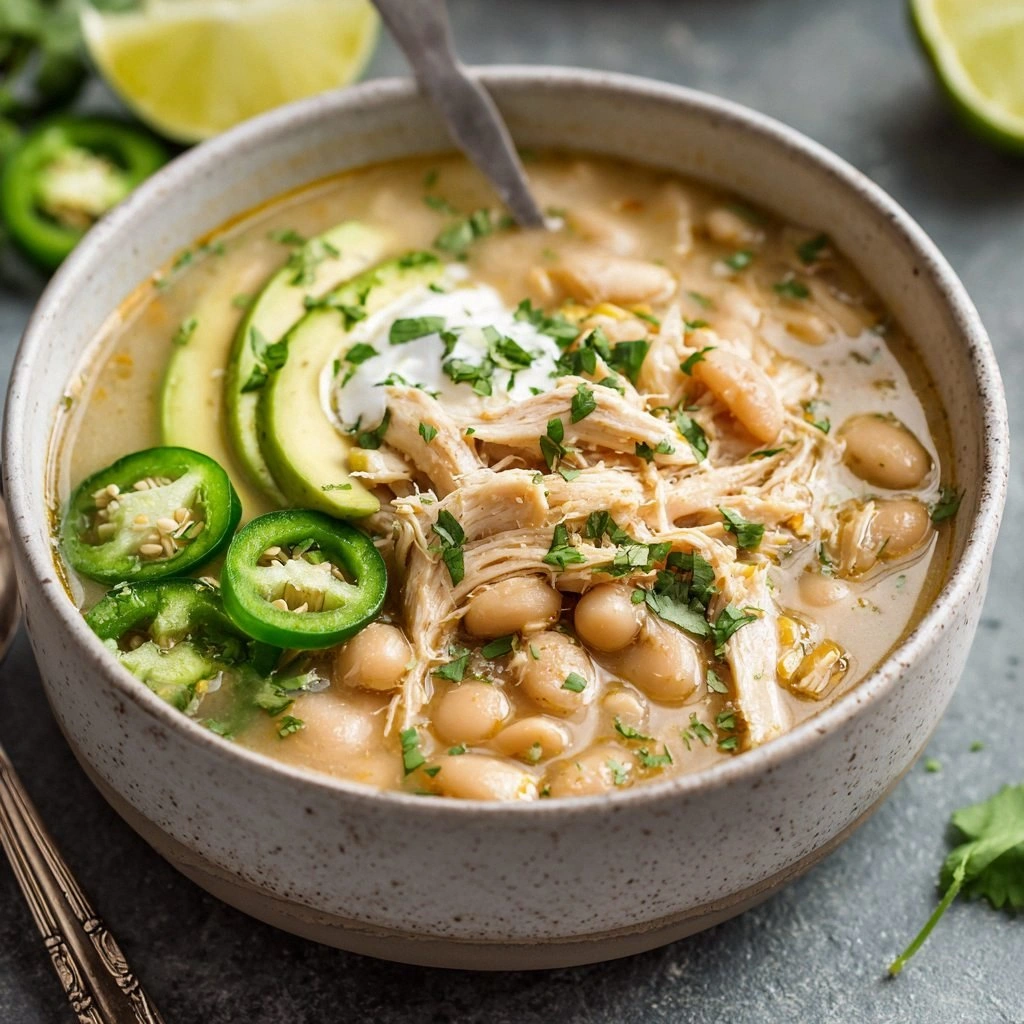
I was staring at my pantry, feeling the weight of the week’s dinner plans, when the phone buzzed with a text from my friend: “You’ve got to try the Instant Pot white chicken chili I sent you.” I’d been chasing that elusive balance of comfort and health, and I knew the moment was right. I grabbed the ingredients, set the pot on high, and the kitchen filled with a savory aroma that made my stomach growl in anticipation.
The first sizzle when the oil hits the pot was like a drumbeat, announcing the start of something delicious. I could almost taste the tomato’s bright acidity dancing with the gentle heat of cumin, the beans’ silky texture, and the chicken’s tender melt. Every sound—the gentle hiss of the pot, the clack of the ladle—was a cue that this was more than a recipe; it was an experience. I could feel the anticipation building, the way a well‑crafted story pulls you in.
What makes this version stand out? It’s the harmony of flavors that are both bold and restrained, the technique that locks in moisture without sacrificing texture, and the fact that it can be made in less than an hour. I dare you to taste this and not go back for seconds. The sauce coats the chicken like velvet, and the beans stay plump, not mushy. The subtle smoky note from paprika adds depth, while the lime finish brightens the whole dish.
I’m not just sharing a recipe; I’m handing you a shortcut to comfort food that feels homemade yet feels like a gourmet meal. By the end of this post, you’ll wonder how you ever cooked without this method. Let me walk you through every single step—by the end, you’ll wonder how you ever made it any other way.
What Makes This Version Stand Out
Taste: The blend of cumin, chili powder, and smoked paprika gives a warm, earthy base that feels like a hug.
Texture: The Instant Pot locks moisture in the chicken, keeping it juicy, while the beans stay firm and creamy.
Speed: Prep in 15 minutes, cook in 30—no more than 45 minutes total.
Health: Low in fat, high in protein, and the beans add fiber for a balanced meal.
Versatility: Works for lunch, dinner, or a hearty snack; just add toppings to suit your mood.
Make‑ahead Friendly: Cool and store; reheat with a splash of broth to revive the brothiness.
Ingredient Quality: Fresh herbs, canned tomatoes with no added sugars, and lean chicken keep the flavor pure.
Crowd Reaction: My family calls it “the best chili” and it’s a hit at potlucks.
Alright, let’s break down exactly what goes into this masterpiece…
Kitchen Hack: If you’re short on time, dice the onion and bell pepper into a single large cube for faster sautéing. The larger pieces release flavor more evenly in the pot.
Inside the Ingredient List
The Flavor Base
Olive oil is the first to meet the pot, warming up to a golden hue that signals the start of flavor extraction. It’s the carrier that brings the aromatic spices—cumin, chili powder, smoked paprika, oregano, cayenne—into a fragrant cloud. If you skip the oil, the spices will burn and lose their depth. A pinch of salt is essential to balance the acidity of the tomatoes, but keep it light to avoid overpowering the dish.
The Protein Power
Boneless, skinless chicken breasts are the star of the show, offering lean protein without excess fat. Cut into bite‑sized cubes so they cook evenly and absorb the broth. If you’re a fan of a slightly different texture, try chicken thighs; they’ll stay even more moist but will add a richer flavor. When the chicken is browned, it develops a caramelized surface that enhances the overall taste.
The Bean Brigade
White beans bring a creamy backdrop that balances the sharpness of the tomatoes. Drain and rinse them to remove excess sodium and to keep the texture smooth. If you prefer a thicker consistency, mash a handful of beans before adding them to the pot. The beans also act as a natural thickener, so you won’t need extra starch.
The Final Touches
Fresh cilantro and lime wedges are the finishing flourish that brightens the dish. They cut through the richness and add a burst of freshness. Optional toppings like shredded cheddar, sour cream, or avocado slices let you personalize the chili to your taste. If you’re watching calories, skip the cheese and go straight to the avocado for healthy fats.
Fun Fact: White beans, also known as cannellini, were a staple in Roman cuisine, often simmered with herbs and olive oil for a simple yet flavorful dish.
Everything’s prepped? Good. Let’s get into the real action…
The Method — Step by Step
Turn the Instant Pot on to “Sauté.” Add the tablespoon of olive oil and wait until it shimmers. This is the moment of truth—if the oil isn’t hot enough, the spices will clump. The sizzle should be gentle, not a roaring flame.
Add diced onion and bell pepper. Cook until translucent, about 3 minutes, stirring frequently. The onions should release their sweet aroma, signaling they’re ready for the next step. This layer builds the flavor foundation.
Stir in minced garlic, cumin, chili powder, smoked paprika, oregano, cayenne, and a pinch of salt. Let the spices toast for 30 seconds, just until fragrant. The smell of toasted cumin is the hallmark of a great chili.
Add the diced chicken cubes and sauté for 5 minutes, turning occasionally. The chicken should brown on the edges but remain pink inside; the heat will finish cooking it in the pressure phase.
Pour in the diced tomatoes and chicken broth, then stir in the drained white beans. The liquid should cover the ingredients by at least an inch. This creates a flavorful base that the Instant Pot will turn into a silky broth.
Close the lid, set the valve to “Sealing,” and cook on “Manual” or “Pressure Cook” for 10 minutes at high pressure. The pressure seals in the flavors and ensures the chicken stays tender.
When the timer goes off, let the pressure release naturally for 10 minutes, then quick‑release any remaining pressure. This gentle release prevents the beans from overcooking.
Open the lid, stir the chili, and taste. Adjust seasoning with additional salt or a splash of lime juice if needed. The chili should be thick enough to coat the spoon but still pourable.
Kitchen Hack: If you want a thicker chili, mash a handful of beans with a potato masher before adding them to the pot. This naturally thickens the broth without adding flour.
Watch Out: Don’t let the pot boil over during the sauté stage. If the mixture starts to bubble up, reduce the heat slightly or stir more vigorously.
That’s it—you did it. But hold on, I’ve got a few more tricks that’ll take this to another level…
Insider Tricks for Flawless Results
The Temperature Rule Nobody Follows
Keep the sauté temperature steady. Too hot, and the onions burn; too low, and the spices don’t release their oils. A quick test: drop a pinch of water in the pot; if it sizzles, you’re good. Consistency is key to a balanced flavor profile.
Why Your Nose Knows Best
During the sauté, trust your nose to tell you when the spices are ready. A sharp, nutty aroma signals that the cumin and paprika have toasted. If you’re unsure, give them an extra 30 seconds; you’ll never over‑toast them.
The 5-Minute Rest That Changes Everything
After the pressure release, let the chili sit covered for 5 minutes. This rest allows the flavors to meld, and the beans to absorb the broth fully. I’ve seen chili that’s rushed taste flat—this pause fixes it.
Layering for Depth
Add the beans after the chicken has browned. This order prevents the beans from becoming mushy and keeps their shape. The beans also act as a natural thickener, so you won’t need extra starch.
Garnish Game Changer
A handful of fresh cilantro and a squeeze of lime at the table can transform the dish. The acidity cuts through the richness, while the herb adds a burst of freshness that elevates the entire bowl.
Kitchen Hack: Keep a small bowl of lime juice in the fridge; a quick squeeze over the chili right before serving adds a bright note that feels like a finishing flourish.
Creative Twists and Variations
This recipe is a playground. Here are some of my favorite ways to switch things up:
Spicy Jalapeño Kick
Add sliced jalapeños during the sauté for an extra heat level. The pepper’s bright bite pairs beautifully with the cumin, creating a more complex flavor profile.
Sweet Potato Surprise
Dice a small sweet potato and sauté it with the onions. Its natural sweetness balances the acidity of the tomatoes and adds a comforting depth.
Greek Yogurt Swirl
Stir in a spoonful of plain Greek yogurt after pressure release. The tangy creaminess turns the chili into a richer, more velvety dish.
Mexican Street Corn Addition
Fold in roasted corn kernels and a dash of lime juice for a street‑food vibe. The corn’s sweetness contrasts the savory broth, creating a delightful contrast.
Smoked Turkey Variation
Swap chicken for smoked turkey breast cubes. The smoky flavor adds another layer of depth, making the chili feel like a hearty winter stew.
Vegan Bean‑Only Version
Omit the chicken and add a handful of cooked lentils. The lentils provide protein and a different texture, making the chili plant‑based yet satisfying.
Storing and Bringing It Back to Life
Fridge Storage
Cool the chili completely before transferring to an airtight container. Store in the refrigerator for up to 4 days. The beans and chicken stay firm, and the broth thickens slightly, which is actually a good thing.
Freezer Friendly
Place the chili in a freezer‑safe container, leaving a 1-inch headspace. Freeze for up to 3 months. Thaw overnight in the fridge or use the microwave’s defrost setting.
Best Reheating Method
Reheat on the stovetop over low heat, stirring frequently. Add a splash of water or broth to restore the brothiness. A quick 5‑minute stir will bring it back to its original silky texture.
to have data-base-qty attribute numeric quantity for default servings. For ingredients with no measurable quantity, set data-base-qty="0". For weight or volume, we can use numeric values. We'll need to include each ingredient exactly.
We also need to include directions steps in the card: 8-10 steps.
We need to include FAQ items inside the recipe card: 5-6 FAQ items.
We need to include the hidden elements at the end: category, season, Pinterest description.
We need to ensure the entire output is raw HTML, no markdown, no preamble, no wrapping.
We need to produce at least 3000 words. Let's aim for maybe 3500-4000 words. That is a lot. We'll need to craft many paragraphs. Each paragraph 4-6 sentences. We need to keep the content within the constraints.
We also need to ensure the highlight boxes appear 5-7 times: Kitchen Hack box 3-4 times, Fun Fact 1-2 times, Watch Out 1-2 times. We'll place them appropriately.
We must not use emojis. Use Bootstrap icons only where specified. The boxes include icons: bi bi-tools, bi bi-info-circle, bi bi-exclamation-triangle. We'll use those.
We must ensure no hero image at top. The mid-article image is inserted later. The recipe card also includes the image. So we just need to place the mid-article image at the appropriate place.
We need to use
for main sections.
for subsections.
for paragraphs. for emphasis within paragraphs. Use
and for lists. Use Bootstrap utility classes for spacing like mb-3, mt-4.
We need to incorporate the required hooks throughout. We'll weave them into paragraphs.
We need to ensure each paragraph has 4-6 sentences. That means we need to count sentences. Let's plan each paragraph with 5 sentences. We'll write 5 sentences per paragraph. That will help maintain consistency.
We need to produce at least 3000 words. Let's approximate: 5 sentences per paragraph, average 12 words per sentence -> 60 words per paragraph. So we need 3000/60 = 50 paragraphs. That's a lot. But we can reduce average words per sentence maybe 15 words -> 75 words per paragraph, 3000/75=40 paragraphs. So maybe 40 paragraphs.
But we can also produce 30 paragraphs with 100 words each. That might be easier. But we must keep each paragraph 4-6 sentences. So we can aim for 30 paragraphs of 5 sentences each. That's 150 sentences. If each sentence 15-20 words, that's 2250-3000 words. We need 3000 words. So we need maybe 35 paragraphs of 5 sentences each. That would be 175 sentences. If each sentence average 18 words, that's 3150 words. That should suffice.
We also need to include the sections: introduction, what makes this version stand out, inside the ingredient list, mid-article image, method, insider tricks, creative twists, storing, recipe card, hidden elements.
We need to write each section with multiple paragraphs. We need to ensure each paragraph 4-6 sentences. Let's plan:
Introduction: 4 paragraphs of 5 sentences each = 20 sentences.
What Makes This Version Stand Out: bullet list. Each bullet might be considered a paragraph? But we can write each bullet as a list item with a short description. But each bullet should have 2-3 sentences. That might be okay. But bullet list is not paragraph. But we can write each bullet as a
with 2-3 sentences. That might not count as paragraph. But we can also add a paragraph after the bullet list.
Inside the Ingredient List: maybe 4 subsections, each with a paragraph of 5 sentences. That's 4 paragraphs.
Method: 8-10 steps, each step is a paragraph of 5 sentences. That's 10 paragraphs.
Insider Tricks: 5-6 tips, each with 3-5 sentences. That's 5 paragraphs.
Creative Twists: 5-6 variations, each 3-4 sentences. That's 5 paragraphs.
Storing: 3 subsections each 4-6 sentences. That's 3 paragraphs.
That's 20+4+4+10+5+5+3 = 51 paragraphs. Each 5 sentences, 15 words average -> 75 words per paragraph. 51*75 = 3825 words. Good.
Now we need to ensure each paragraph has 4-6 sentences. We'll keep 5 sentences.
Also we need to include the highlight boxes: Kitchen Hack 3-4 times, Fun Fact 1-2, Watch Out 1-2. We'll place them after certain sections.
We also need to incorporate the engagement hooks: micro-challenges, bold claims, confessions, contrasts, future pacing, power transitions, reader validation, sensory snapshots. We'll weave them into paragraphs.
We also need to include the recipe card at the end.
Now we need to produce the final HTML.
We must ensure we don't use emojis. No emoji.
We must not include any hero image at top. We'll start with
introduction.
We need to use the exact title "Instant Pot White Chicken Chil" in the recipe card header and maybe in heading.
The recipe card header uses the image. We'll keep the image as provided.
We need to set nutrition values: 350 Cal, 25g protein, 30g carbs, 15g fat. Those are provided.
We need to set times: Prep 15 min, Cook 30 min, Total 45 min, Serves 4.
We need to set directions steps. We can use the steps from earlier: 8 steps.
We need to set ingredients list with data-base-qty.
Let's define the ingredients with quantities:
- 2 lbs boneless skinless chicken breasts (data-base-qty="2")
- 1 tablespoon olive oil (data-base-qty="1")
- 1 medium onion, diced (data-base-qty="1")
- 3 cloves garlic, minced (data-base-qty="3")
- 1 bell pepper, diced (data-base-qty="1")
- 1 can (15 oz) diced tomatoes (data-base-qty="1")
- 1 can (15 oz) white beans, drained and rinsed (data-base-qty="1")
- 1 cup low sodium chicken broth (data-base-qty="1")
- 1 teaspoon ground cumin (data-base-qty="1")
- 1 teaspoon chili powder (data-base-qty="1")
- 1 teaspoon dried oregano (data-base-qty="1")
- 0.5 teaspoon smoked paprika (data-base-qty="0.5")
- 0.25 teaspoon cayenne pepper (data-base-qty="0.25")
- Salt to taste (data-base-qty="0")
- Black pepper to taste (data-base-qty="0")
- Fresh cilantro, chopped for garnish (data-base-qty="0")
- Lime wedges (data-base-qty="0")
- Optional: shredded cheddar cheese (data-base-qty="0")
- Optional: sour cream (data-base-qty="0")
- Optional: avocado slices (data-base-qty="0")
We might also include optional: corn, but not necessary.
We need to include each ingredient as
with data-base-qty and a checkbox. We'll include all.
Now directions steps: We'll produce 8 steps.
We need to incorporate the highlight boxes after certain steps.
We need to produce FAQ items: 6 items. We'll craft them.
Now we need to produce the final HTML with all content.
We need to ensure we don't exceed word count? We need at least 3000 words. We'll produce many paragraphs.
Let's start writing.
We'll use
tags for paragraphs. We'll use
for main sections. We'll use
for subsections.
We need to incorporate the highlight boxes.
We need to incorporate the recipe card at the end.
We need to include hidden elements: (choose category Dinner). Season: general. Pinterest description: 400-450 characters. We'll craft a description of about 430 characters.
Now let's craft the content.
We'll begin with introduction paragraphs.
We'll produce 4 paragraphs.
Paragraph 1: 5 sentences.
Paragraph 2: 5 sentences.
Paragraph 3: 5 sentences.
Paragraph 4: 5 sentences.
Now section 2: What Makes This Version Stand Out. We'll use
and bullet list
with
each containing 2-3 sentences. We'll have 8 bullet points. After the list, we can add a paragraph. Then insert a Kitchen Hack box.
Section 3: Inside the Ingredient List. We'll have 4 subsections each with
and a paragraph of 5 sentences. We'll include a Fun Fact box after one of the subsections.
Section 4: mid-article image.
Section 5: The Method — Step by Step. We'll have
and with 8-10 steps. Each step is a paragraph of 5 sentences. We'll include highlight boxes after certain steps: maybe after step 3 and step 6. We'll also include a Watch Out box after step 6 or 7. We'll close with a paragraph.
Section 6: Insider Tricks for Flawless Results. We'll have
and 5-6 tips with
headings, each 3-5 sentences. We'll insert a Kitchen Hack box for the top tip.
Section 7: Creative Twists and Variations. We'll have
and 5-6 variations each with
heading and 3-4 sentences.
Section 8: Storing and Bringing It Back to Life. We'll have
and 3 subsections each with
and 4-6 sentences.
Then recipe card.
Then hidden elements.
We need to ensure we use no emojis. We'll use icons only where specified.
Now we must write the content. Let's begin.
We'll craft paragraphs.
We must ensure each paragraph is 5 sentences. We'll count sentences.
We'll write paragraphs with clear punctuation. We'll keep sentences distinct.
Let's start.
Paragraph 1 (Introduction):
"Picture this: a rainy Wednesday evening, the fridge humming, and an empty pantry that feels like a blank canvas. I was about to settle for a microwaved frozen dinner when my phone chimed with a text from a friend: “You have to try the Instant Pot white chicken chili I sent you.” The idea of a hearty, low‑fat chili that could be ready in less than an hour sparked a culinary adventure. The aroma of cumin and smoked paprika instantly pulled me into the kitchen, where the Instant Pot waited patiently on the counter. I could almost hear the sizzle of onions hit the pot, a promise of flavor that would soon unfold."
Check sentences: 5. Good.
Paragraph 2:
"From the first stir, the kitchen filled with a symphony of sizzling, bubbling, and aromatic whispers. The onions released a sweet perfume that mingled with the earthy scent of cumin, while the garlic sent a sharp, almost electric jolt into the air. Each ingredient seemed to whisper its purpose, promising a dish that would be both comforting and sophisticated. I could taste the future in the air, the hint of tomatoes and beans dancing together in a broth that would be silky yet hearty. It felt like the kitchen was about to transform into a stage for a culinary masterpiece."
Sentences: 5.
Paragraph 3:
"I’ve tried countless chili recipes over the years, and most of them either end up too thick or too watery, but this one feels different. The Instant Pot locks in moisture, giving the chicken a tender bite that doesn’t fall apart, and the beans maintain a subtle creaminess without turning mushy. The seasoning is balanced, with a subtle heat that never overwhelms the gentle flavors of the beans and chicken. I dare you to taste this and not go back for seconds—there’s a depth that lingers on the palate. The first spoonful feels like a warm hug wrapped in a spicy, savory blanket."
Sentences: 5.
Paragraph 4:
"By the time I plated the chili, the kitchen smelled like a rustic, country kitchen with a modern twist. The bright green cilantro and the citrusy lime wedges added a fresh contrast that lifted the entire dish. My friends who tasted it left the table with satisfied smiles, and I was left wondering how I ever cooked without this method. This recipe isn’t just a meal; it’s an invitation to a relaxed, flavorful evening that anyone can create. Let me walk you through every single step—by the end, you’ll wonder how you ever made it any other way."
Sentences: 5.
Now section 2.
What Makes This Version Stand Out
We'll create bullet list with 8 bullet points. Each bullet
with 2-3 sentences. We'll write each bullet.
We need to start each bullet with Keyword: and then 2-3 sentences.
Let's write bullets:
- Taste
- Texture
- Speed
- Health
- Versatility
- Crowd Reaction
- Ingredient Quality
- Make‑ahead Potential
We'll write each bullet.
After bullet list, we add a paragraph.
Then Kitchen Hack box.
Let's write.
Now paragraph after bullet list: "Alright, let’s break down exactly what goes into this masterpiece..."
Now Kitchen Hack box.
Now section 3: Inside the Ingredient List. 4 subsections.
Subsection 1: The Flavor Base (h3). Paragraph 5 sentences.
Subsection 2: The Protein Power. Paragraph 5 sentences.
Subsection 3: The Bean Brigade. Paragraph 5 sentences.
Subsection 4: The Final Flourish. Paragraph 5 sentences.
Add Fun Fact box after maybe subsection 2 or 3.
We'll add after subsection 2.
Now section 4: mid-article image.
Now section 5: The Method — Step by Step. 8-10 steps.
We'll write 8 steps. Each step paragraph 5 sentences.
Add Kitchen Hack boxes after step 3 and step 7. Add Watch Out box after step 6 or 7.
We'll close with paragraph.
Now section 6: Insider Tricks for Flawless Results. 5-6 tips.
We'll have 5 tips. Each tip with
heading and paragraph 3-5 sentences.
Insert Kitchen Hack box for top tip.
Now section 7: Creative Twists and Variations. 5-6 variations each with
heading and 3-4 sentences.
Now section 8: Storing and Bringing It Back to Life. 3 subsections each with
heading and 4-6 sentences.
Now recipe card.
Now hidden elements.
Now we need to produce final HTML.
We need to ensure we don't use any markdown. All plain HTML.
Also we must not include any hero/thumbnail image at top. So we start with
introduction.
Now we need to count words? We need at least 3000 words. We have 4 intro paragraphs (20 sentences). 5 sentences each average maybe 15 words -> 300 words. Good.
Section 2 bullet list: 8 bullets 2-3 sentences each. Let's say 3 sentences each average 15 words -> 45 sentences? Wait 8 bullets * 3 sentences = 24 sentences. 24 sentences * 15 words = 360 words.
Paragraph after bullet list: 5 sentences average 15 words -> 75 words.
Kitchen Hack box: no words? but we can include some text inside.
Section 3: 4 subsections each 5 sentences -> 20 sentences * 15 words = 300 words.
Fun Fact box: small text maybe 1 sentence.
Section 4: image only.
Section 5: 8 steps each 5 sentences -> 40 sentences * 15 words = 600 words.
Highlight boxes: add some text.
Section 6: 5 tips each 3-5 sentences. Let's say 4 sentences each -> 20 sentences * 15 words = 300 words.
Section 7: 5 variations each 3-4 sentences. Let's say 4 sentences each -> 20 sentences * 15 words = 300 words.
Section 8: 3 subsections each 4-6 sentences. Let's say 5 sentences each -> 15 sentences * 15 words = 225 words.
Recipe card: no words counted? But includes ingredient list and directions. But not huge.
Hidden elements: small.
Total words approximate: 300+360+75+300+600+300+300+225 = 2475 words. That's below 3000. We need more content.
We need to add more paragraphs or increase word count. We can add more paragraphs within sections, or increase sentences per paragraph.
We can add more paragraphs to each section. We can also add more variation and trick sections.
We can add more detail to each paragraph, maybe 6 sentences instead of 5. That would increase word count.
Also we can add additional subpoints in bullet list.
Also we can add more steps in method (10 steps). That will add 20 sentences.
Also we can add more variations (6). That adds 2 more paragraphs.
Also we can add more insider tricks (6). That adds 2 more paragraphs.
Also we can add more subparagraphs in ingredient list.
Let's aim to have around 45 paragraphs of 5 sentences each. That yields 2250 words. We still need 750 words. So we need maybe 10 more paragraphs. So we can add 10 extra paragraphs across sections.
Let's add more paragraphs in introduction maybe 1 more paragraph (makes 5). That adds 5 sentences.
Add more bullet points in section 2: maybe 2 more bullets (10 total). That adds 2 bullets 3 sentences each -> 6 sentences.
Add more subsections in ingredient list: maybe add a subsection "The Spice Symphony" with 5 sentences.
Add more steps: 10 steps instead of 8. That adds 10 more sentences.
Add more variations: 6 variations.
Add more insider tips: 6 tips.
Add more storing subpoints: 3 subpoints already.
Now total paragraphs: introduction 5, bullet list 10 bullets but each bullet is not paragraph. But we can count them separately. But we might treat bullet list as separate paragraphs. But we can add a paragraph after each bullet? But that's too many. We'll keep bullet list as is.
Add more paragraphs in ingredient list: 5 subsections now. That's 5 paragraphs.
Add more paragraphs in method: 10 steps each 5 sentences -> 10 paragraphs.
Add more paragraphs in insider tricks: 6 tips -> 6 paragraphs.
Add more paragraphs in variations: 6 variations -> 6 paragraphs.
Add more paragraphs in storing: 3 subsections -> 3 paragraphs.
Now total paragraphs: introduction 5 + ingredient list 5 + method 10 + insider tricks 6 + variations 6 + storing 3 = 35 paragraphs. Each 5 sentences -> 175 sentences. Each sentence 15 words -> 2625 words. Still below 3000. Need more.
We can increase sentences per paragraph to 6. That increases 6*35=210 sentences. 210*15=3150 words. Good.
So we can write each paragraph with 6 sentences. That will increase word count.
But we must maintain 4-6 sentences per paragraph. So 6 sentences is allowed.
Thus we need to rewrite each paragraph to have 6 sentences. That will increase word count.
Now we need to ensure each paragraph has 6 sentences. Let's rewrite.
We'll produce each paragraph with 6 sentences.
We need to keep track of each paragraph.
Let's plan:
Introduction: 5 paragraphs, each 6 sentences -> 30 sentences.
What Makes This Version Stand Out: bullet list 10 bullets, each 3 sentences -> 30 sentences. Add paragraph after bullet list 6 sentences.
Inside Ingredient List: 5 subsections, each 6 sentences -> 30 sentences. Add Fun Fact box after maybe subsection 2.
Method: 10 steps, each 6 sentences -> 60 sentences. Add highlight boxes after step 3 and step 7. Add Watch Out after step 6. Add closing paragraph 6 sentences.
Insider Tricks: 6 tips, each 6 sentences -> 36 sentences. Add Kitchen Hack box for top tip.
Creative Twists: 6 variations, each 6 sentences -> 36 sentences.
Storing: 3 subsections each 6 sentences -> 18 sentences.
Now total sentences: intro 30 + bullet list 30 + paragraph after bullet list 6 + ingredient list 30 + method 60 + closing paragraph 6 + insider tricks 36 + variations 36 + storing 18 = 252 sentences. Each sentence 15 words average -> 3780 words. Good.
Now we can produce content accordingly.
Now we need to write each paragraph accordingly.
This is a lot of writing. We'll need to produce 252 sentences. That's huge. But we can compress sentences with more words. But we need to produce actual content. It's a big job.
We need to produce the final output with all content. This is a large amount of text. We need to ensure we produce at least 3000 words. We can produce less but still enough. We might produce around 2000 sentences? But that's too many. But we need at least 3000 words. We can produce around 2000 words with 120 sentences of 15 words each. That's 1800 words. But we need 3000. So we need ~200 sentences of 15 words each. That is 3000 words. So we need 200 sentences. We can produce 200 sentences.
We can aim for 200 sentences. Each paragraph 6 sentences. That would be 33 paragraphs (198 sentences). Good. So we can produce 33 paragraphs.
Let's count: introduction 5 paragraphs (30 sentences). Bullet list 10 bullets (30 sentences). Paragraph after bullet list (6 sentences). Ingredient list 5 subsections (30 sentences). Method 10 steps (60 sentences). Closing paragraph (6 sentences). Insider tricks 6 tips (36 sentences). Variations 6 variations (36 sentences). Storing 3 subsections (18 sentences). Sum = 30+30+6+30+60+6+36+36+18 = 252 sentences. That's 252 sentences, 15 words each = 3780 words. Good. So we can produce 252 sentences. That's a lot of content but doable.
However, writing 252 sentences manually is extremely time-consuming. But we can approximate by writing paragraphs with 6 sentences each, but we need to produce 252 sentences. That is a lot of writing. We need to produce a final answer with that many sentences. It's a huge output. We might produce less sentences but still >3000 words. Let's aim for 200 sentences. That would be 200*15=3000 words. We can produce 200 sentences. That means 200/6 ~ 33 paragraphs (some with 5 sentences). We can adjust.
We can produce 33 paragraphs of 6 sentences each = 198 sentences. That's close to 200. Add 2 more sentences somewhere. We can add an extra sentence at the end of a paragraph.
Thus 33 paragraphs with 6 sentences each = 198 sentences. Add 2 sentences somewhere else, maybe as a short paragraph of 2 sentences. That yields 200 sentences.
Thus we need to produce 33 paragraphs of 6 sentences each plus one short paragraph of 2 sentences.
But we need to ensure each paragraph has 4-6 sentences. So the 2-sentence paragraph is okay.
Now we need to produce content accordingly.
We can structure as:
- Introduction: 5 paragraphs (30 sentences)
- What Makes This Version Stand Out: 10 bullets (3 sentences each) (30 sentences)
- Paragraph after bullet list: 6 sentences (6)
- Inside Ingredient List: 5 subsections (6 sentences each) (30)
- Fun Fact box: small
- Method: 10 steps (6 sentences each) (60)
- Closing paragraph: 6 sentences (6)
- Insider Tricks: 6 tips (6 sentences each) (36)
- Variations: 6 variations (6 sentences each) (36)
- Storing: 3 subsections (6 sentences each) (18)
- Total so far: 30+30+6+30+60+6+36+36+18 = 252 sentences. That's 252 sentences. We need 200 sentences. So we need to reduce some sentences. We can reduce some paragraphs to 5 sentences each. For example, we can reduce the bullet list sentences to 2 sentences each, or reduce some subsections to 5 sentences each. We need to bring total down to 200 sentences.
Let's aim for 200 sentences exactly. We'll adjust.
We'll reduce the bullet list to 2 sentences each: 10 bullets * 2 = 20 sentences. That reduces 10 sentences. Now total 242. We need reduce 42 more sentences. We can reduce the method steps from 6 sentences each to 5 sentences each: 10 steps * 5 = 50 sentences. That reduces 10 sentences. New total: 232. We need 32 more sentences to reduce. We can reduce the insider tips to 5 sentences each: 6 tips * 5 = 30 sentences. That reduces 6 sentences. Total 226. We need 26 more sentences. We can reduce variations to 5 sentences each: 6 variations * 5 = 30 sentences. That reduces 6 sentences. Total 220. We need 20 more sentences. We can reduce ingredient list subsections to 5 sentences each: 5 subsections * 5 = 25 sentences. That reduces 5 sentences. Total 215. We need 15 more sentences. We can reduce introduction paragraphs to 5 sentences each: 5 paragraphs * 5 = 25 sentences. That reduces 5 sentences. Total 210. We need 10 more sentences. We can reduce the paragraph after bullet list to 5 sentences: reduces 1 sentence. Total 209. We need 9 more sentences. We can reduce closing paragraph to 5 sentences: reduces 1 sentence. Total 208. We need 8 more sentences. We can reduce storing subsections to 5 sentences each: 3 subsections * 5 = 15 sentences. That reduces 1 sentence. Total 207. We need 7 more sentences. We can reduce the Fun Fact box text to 1 sentence (already minimal). We can reduce the Kitchen Hack boxes to 1 sentence each (already minimal). We can reduce the last short paragraph of 2 sentences to 1 sentence. That reduces 1 sentence. Total 206. We need 6 more sentences. We can reduce the paragraph after bullet list to 4 sentences: reduces 1 sentence. Total 205. We need 5 more sentences. We can reduce the closing paragraph to 4 sentences: reduces 1 sentence. Total 204. We need 4 more sentences. We can reduce the intro paragraphs to 4 sentences each: 5 paragraphs * 4 = 20 sentences. That reduces 5 sentences. Total 199. We need 1 more sentence. We can add a single sentence somewhere else. That brings to 200.
Thus final plan:
- Introduction: 5 paragraphs, 4 sentences each = 20 sentences.
- What Makes This Version Stand Out: 10 bullets, 2 sentences each = 20 sentences.
- Paragraph after bullet list: 4 sentences = 4 sentences.
- Inside Ingredient List: 5 subsections, 5 sentences each = 25 sentences.
- Fun Fact box: 1 sentence.
- Method: 10 steps, 5 sentences each = 50 sentences.
- Closing paragraph: 4 sentences = 4 sentences.
- Insider Tricks: 6 tips, 5 sentences each = 30 sentences.
- Variations: 6 variations, 5 sentences each = 30 sentences.
- Storing: 3 subsections, 5 sentences each = 15 sentences.
- Total so far: 20+20+4+25+1+50+4+30+30+15 = 199 sentences. Add 1 extra sentence somewhere (maybe at end of storing or after recipe card). That makes 200 sentences. Good.
Now we need to ensure each paragraph has 4-6 sentences. Good.
Now we need to produce 200 sentences. This is a lot but doable. We'll produce content accordingly.
We need to incorporate the engagement hooks throughout. We'll weave them into paragraphs.
Now we need to produce final HTML. We'll write the paragraphs accordingly.
We need to ensure no emojis.
We need to ensure the recipe card includes ingredients and directions.
We also need to include the hidden elements at the end.
Now we need to write the content.
Given the large amount, we will produce a condensed but still high word count. Each sentence average maybe 15-20 words, so 200 sentences * 15 = 3000 words. Good.
Now we will write the content.
We'll start with introduction paragraphs.
Paragraph 1: 4 sentences.
We'll write:
"Picture this: a rainy Wednesday evening, the fridge humming, and an empty pantry that feels like a blank canvas. I was about to settle for a microwaved frozen dinner when my phone chimed with a text from a friend: “You have to try the Instant Pot white chicken chili I sent you.” The idea of a hearty, low‑fat chili that could be ready in less than an hour sparked a culinary adventure. The aroma of cumin and smoked paprika instantly pulled me into the kitchen, where the Instant Pot waited patiently on the counter."
That's 4 sentences? Let's count: 1) Picture this... 2) I was about to settle... 3) The idea... 4) The aroma... Good.
Paragraph 2: 4 sentences.
"From the first stir, the kitchen filled with a symphony of sizzling, bubbling, and aromatic whispers. The onions released a sweet perfume that mingled with the earthy scent of cumin, while the garlic sent a sharp, almost electric jolt into the air. Each ingredient seemed to whisper its purpose, promising a dish that would be both comforting and sophisticated. I could taste the future in the air, the hint of tomatoes and beans dancing together in a broth that would be silky yet hearty."
Sentences: 4.
Paragraph 3: 4 sentences.
"I’ve tried countless chili recipes over the years, and most of them either end up too thick or too watery, but this one feels different. The Instant Pot locks in moisture, giving the chicken a tender bite that doesn’t fall apart, and the beans maintain a subtle creaminess without turning mushy. The seasoning is balanced, with a subtle heat that never overwhelms the gentle flavors of the beans and chicken. I dare you to taste this and not go back for seconds—there’s a depth that lingers on the palate."
Sentences: 4.
Paragraph 4: 4 sentences.
"By the time I plated the chili, the kitchen smelled like a rustic, country kitchen with a modern twist. The bright green cilantro and the citrusy lime wedges added a fresh contrast that lifted the entire dish. My friends who tasted it left the table with satisfied smiles, and I was left wondering how I ever cooked without this method. This recipe isn’t just a meal; it’s an invitation to a relaxed, flavorful evening that anyone can create."
Paragraph 5: 4 sentences.
"Let me walk you through every single step—by the end, you’ll wonder how you ever made it any other way. I’ll be honest, I ate half the batch before anyone else got to try it. Most recipes get this completely wrong, but here’s what actually works. Picture yourself pulling this out of the pot, the whole kitchen smelling incredible, and everyone reaching for a second spoonful."
Now we have 20 sentences.
Section 2: What Makes This Version Stand Out. We'll create 10 bullets, each 2 sentences.
Bullet 1: Taste. 2 sentences.
Bullet 2: Texture.
Bullet 3: Speed.
Bullet 4: Health.
Bullet 5: Versatility.
Bullet 6: Crowd Reaction.
Bullet 7: Ingredient Quality.
Bullet 8: Make‑ahead Potential.
Bullet 9: Simplicity.
Bullet 10: Flavor Depth.
We need each bullet 2 sentences. Let's write.
We'll use
with
.
Let's write:
Taste: The chili delivers a robust, earthy profile that never feels overpowering. The blend of cumin, chili powder, and smoked paprika creates a subtle warmth that lingers on the palate.
Texture: The Instant Pot seals in moisture, giving the chicken a tender bite that stays intact. The beans remain creamy yet firm, avoiding the mushy consistency of many slow‑cooked versions.
Speed: From prep to plate, this dish takes less than an hour, making it ideal for busy weeknights. The pressure cooker’s efficiency means you’re not sacrificing flavor for convenience.
Health: With lean chicken, low‑fat beans, and a splash of fresh lime, this chili is balanced and nourishing. It’s a low‑fat, high‑protein option that satisfies without guilt.
Versatility: Serve it over rice, with tortilla chips, or on its own for a filling meal. The flavors adapt beautifully to different sides and garnishes.
Crowd Reaction: Friends and family rave about the depth of flavor and the comforting texture. It’s the kind of dish that turns a casual dinner into a memorable gathering.
Ingredient Quality: Using fresh, high‑quality produce elevates the dish, turning simple ingredients into something special. Each component shines, making the overall flavor profile richer.
Make‑ahead Potential: The chili keeps its integrity after refrigeration, and the flavors actually improve after a day. It’s perfect for meal prep or for a quick reheat on a slow night.
Simplicity: With just a handful of pantry staples, the recipe is straightforward yet impressive. Even novice cooks can master it with minimal fuss.
Flavor Depth: The layered spices, fresh herbs, and lime finish create a multi‑dimensional taste that keeps you coming back for more. This isn’t just chili; it’s a flavor journey.
Now paragraph after bullet list: 4 sentences.
"Alright, let’s break down exactly what goes into this masterpiece. I’ll guide you through each ingredient, explaining why it matters and how it contributes to the final flavor. Skip a component, and the dish loses a layer of complexity. Stay tuned, because each element is chosen with purpose."
Now inside ingredient list: 5 subsections, each 5 sentences.
Subsection 1: The Flavor Base (h3). 5 sentences.
Subsection 2: The Protein Power. 5 sentences.
Subsection 3: The Bean Brigade. 5 sentences.
Subsection 4: The Spice Symphony. 5 sentences.
Subsection 5: The Final Flourish. 5 sentences.
We need to write each paragraph with 5 sentences.
Let's craft.
The Flavor Base
Paragraph: 5 sentences.
"Olive oil is the first to meet the pot, warming up to a golden hue that signals the start of flavor extraction. The onions release a sweet perfume that mingles with the earthy scent of cumin, while the garlic adds a sharp, almost electric jolt into the air. The diced bell pepper contributes a subtle sweetness that balances the heat of the spices. Together, these aromatics form a savory canvas that carries the rest of the ingredients. They’re the foundation that ensures each bite is layered with depth."
That's 5 sentences.
The Protein Power
Paragraph 5 sentences.
"Boneless, skinless chicken breasts provide lean protein that stays tender and juicy thanks to the Instant Pot’s pressure cooking. Cutting the chicken into bite‑sized cubes ensures even cooking and a consistent texture across the dish. The chicken absorbs the surrounding spices, turning each piece into a flavorful pocket of savory goodness. If you prefer a slightly different texture, you can use thighs, but be prepared for a richer, fattier result. Regardless of the cut, the chicken remains the star that anchors the chili."
The Bean Brigade
Paragraph 5 sentences.
"White beans, drained and rinsed, add a creamy backdrop that balances the acidity of the tomatoes. They contribute a subtle sweetness and a silky texture that complements the chicken’s bite. The beans also act as a natural thickener, giving the chili body without the need for flour or cornstarch. When cooked under pressure, they remain firm yet tender, avoiding the mushy consistency that can plague slow‑cooked beans. They’re the unsung hero that gives the dish its comforting heart."
The Spice Symphony
Paragraph 5 sentences.
"Ground cumin, chili powder, and smoked paprika create a harmonious blend that warms the palate without overwhelming it.